Tuesday, May 1, 2018
Book Review: David Reich - Who We Are and How We Got Here

Thursday, April 5, 2018
Book Review: Leila Slimani - The Perfect Nanny

Sunday, April 1, 2018
Book Review: Navid Kermani - Between Quran and Kafka: West-Eastern Affinities

- "Don't Follow the Poets!". The power of the Koran owes something essential to its original language, as seen by the plentiful conversion-by-poetry stories. However, the special relationship between religion and poetry in Islamic tradition could be considered a weakness as well as a strength, especially when you consider that modern spoken Arabic has diverged from Koranic Arabic in different ways in different countries. Classical Arabic's beauty hangs over modern Arabic in a positive way, providing endless inspiration thanks to its ambiguities, but also a negative way, with over-literal interpretations risking stagnation: Osama bin Laden spoke Arabic in a plain, austere way that mirrored his fundamentalist religious views.
- "Revolt against God". Dante's Divine Comedy can be seen as a response to Islamic literature, above all the Persian Fariduddin Attar's The Book of Suffering. Many Islamic writers had surprisingly diverse theodicies and attitudes to the "submission" at the heart of Islam, as individuals have similar reactions to the tribulations of life no matter their religion, much as we can see in the different ways the Book of Job is viewed. Though much of the modern Christian and Jewish literary traditions sees themselves as apart from the Islamic tradition in terms of individual independence vs submission, the universal urge of defiance (Kermani's most-lauded cultural signifier) crosses boundaries.
- "World without God". King Lear is Shakespeare's finest work, because of how it parallels the great Biblical drama of Job in its exploration of sorrow, resolution, loss, and loyalty without repeating it; in fact its secularization might even put it above its religious competitor. As George Orwell pointed out, even famed Shakespeare-hater Leo Tolstoy appreciated how Shakespeare put human agency above divine destiny, and even when our explanation for our calamities shifts from the caprices of God to the vagaries of nature/fate (cf. Julius Caesar's "The fault is not in our stars... but in ourselves"), we are still masters of our own fate, even when it hurts.
- "Heroic Weakness". The minor 1759 play "Philotas" by Gotthold Lessing, where a captured prince decides that his death rather than being ransomed will give his country a decisive advantage in a war, offers a useful framework to discuss modern terrorism, not only 9/11 but also crimes in Germany by both supposedly "Germanized" Arabs and "native" Germans. Often people decide that the conflict between your cultural heritage and your ethnic/religious heritage often can't be reconciled; Thilo Sarrazin's infamous book Germany's Self-Destruction's emphatic declaration that Muslims can't ever be anything but Muslim is contrasted with Hannah Arendt's melancholy agreement that Jews are often forced to place their Jewish identity over every other aspect of their selves. To Kermani, all ideologies beneath universalist humanism are beneath any civilized person - patriotism, religion, and ethnonationalism are all deadly traps.
- "God Breathing". The act of breathing - inborn and automatic, yet capable of being voluntarily overridden for brief periods - provides a good metaphor for the eternal question of free will vs human choice. Goethe, the archetypal German humanist, wrote a lot about everything, but in his poem Talisman, among other works, his use of the breath metaphor is a perfect way to think about the spirit of God.
- "Filth of My Soul". Heinrich von Kleist, a German playwright who committed mutual suicide with his platonic girlfriend (!), wrote the play Amphitryon, which contains a scene wherein at a crucial moment the heroine Alcmene, struggling to express her feelings of love, utters a single word: "Ach!" A simple, single word, but in context of the play, as well as compared to the varied depictions of love in von Kleist's other works, it offers an excuse to discourse on the nature of love and its expressions, which range from the brutal devouring of Achilles by Penthesilea to more refined sighing, as in the writings of the great Sufi mystic Ibn Arabi.
- "The Truth of Theatre". Shiite passion plays, known as taziyeh, honor the death of Hussein at the Battle of Karbala. The conventions of the taziyeh are contrasted against the theories of Berthold Brecht, in particular the alienation effect. Brecht rejected much of the philosophical underpinnings of Western drama, especially the emotional catharsis theories of Aristotle which form the implicit backbone of most conventional Western plays, but even though Brecht's works strike observers as very different due to his emphasis on artificiality, taziyeh is often a level beyond Brecht in both in its rejection of the Western model and its use of mythic/historical energies to produce emotional impacts. This is especially due to the role of the audience, which responds to this Shiite origin story in a way that has no contemporary in secular Western theater. It is extremely curious why he does not compare taziyeh to Christian passion plays, however.
- "Liberate Bayreuth!". Yet another Wagnerian conversion story, though Kermani can't get over the lameness of the period staging, feeling that it's unworthy of the grandeur and power of the music. The transcendent effects of some of the greatest music ever written struggles in its settings partially because of its being straitjacketing by the conventions of the past; anti-naturalism produced in an era of naturalism. There's also a funny dig at the operatic pretensions of Roger Waters and Pink Floyd, although he's wrong... The Wall rules!
- "Swimming in the Afternoon". Much like how second-generation Americans often feel not-quite-fully grounded in American culture, Germany can inspire the same ambivalence in its recent arrivals. Kermani feels that way, and so did Kafka: no matter how Kafka wrote, he was tormented by identity - Hapsburg, German, Czech, Jewish? Defining a national literary culture is always tricky, especially when it's one that wants to have an international aspect as well, and even more especially if it's German, which has been separated, united, divided, and reunified in so many ways throughout history, and whose many writers have often been defined as much by their opposition to German politics as much as by their love for German culture. It would be only too fitting to declare Kafka the ultimate German writer, who only escaped the Holocaust by dying too young.
- "The Duty of Literature". The early 20th century Iranian author Sadeq Hedayat was one of those cranky, scandalous, outré writers whose iconoclasm has become much more attractive with the passage of time. His life has many parallels with Kafka, and he was fascinated by his German counterpart, but their artistic sensibilities did not always overlap - Hedayat's stories were much more grounded in everyday life than the more abstract settings of Kafka. Hedayat's interest in Kafka was primarily in Kafka's grim portrayal of the world, an interest made more poignant to the reader by his own suicide, but much like Kafka's reputation has survived his early death, so has Hedayat's.
- "Towards Europe". Poets, Stefan Zweig chief among them, had been singing the praises of Europe as a single entity long before politicians had the vision, even as its nations were still vigorously persecuting their greatest artists over distinctions that now mean nothing. But while "Europe" now means something to the residents of its current member states, you only have to look at the refugee crisis to see how it means something far different to its neighbors to the south. In one sense, Europe's defenses against unchecked immigration are perfectly rational, but in another they are an abandonment of the dreams that helped create it. Refugees are trading the certain death of their homes for the potential death of the crossing of the seas; while the urge to wall oneself off is understandable, one need only look at Europe's history to see where that urge leads. You don't have to be religious to favor accommodating the refugees, you just have to look at the lives and works of the great Europeans of the past.
- "In Defence of the Glass Bead Game". Hermann Hesse's final novel The Glass Bead Game was much derided upon its release, but its vision of a sterile, uncreative world where people play meaningless games all day is, shall we say, not without interest in the modern world. This essay is kind of a downer; Kermani makes many comparisons between our own time and the fictional land of Castalia in the novel, but shies away from the obvious conclusion that we're at the end of our creative tether. I don't agree, but I can sympathize with that conclusion.
- "The Violence of Compassion". On the occasion of being awarded the Hannah Arendt Prize, how the rights of man (based on the idea of universal rights) are balanced against the rights of the citizen (based on a nationalist conception of identification with a particular state), with reference to the American and French Revolutions, as well as Arendt's relationship to Zionism. Are revolutions always providers or guarantors of liberties, or to truly benefit their participants do they require preconditions, like relative equality, that modern revolutions like the Arab Spring lack?
- "Tilting at Windmills". At an event honoring the writer Martin Mosebach, a comparison of his novelistic style with Cervantes', and a question of what really matters in novels:
The structure [of his latest novel, The Moon and the Girl] is frighteningly perfect – and yet that is not what thrills this eulogist, for one, about the laureate. Naturally we younger readers want the explosion, not the perfection; what interests us about the plot is most of all the digression. But, on the other hand, something emerges further in The Moon and the Girl that was not yet present in the early novels, with their fairly endearing characters, and that only in West End, in A Long Night at the latest, takes on the unsettling quality I find indispensable in literature: what emerges is malice. It is no accident that The Moon and the Girl contains the first cold-blooded murder in a Mosebach novel. Literature has to be malicious, it has to hurt; for the sake of humanity itself, it has to be merciless in its view of human beings.
- "One God, One Wife, One Cheese". Kermani's recollections of Hushang Golshiri, an Iranian poet who was a bit of a character.
- "Sing the Quran Singingly". The Koran is meant to be read aloud, and though oral recitation of the Bible/Torah is also important in their respective traditions, the act of speaking what is technically the word of God is more important in Islam. Germans have worried about Muslim efforts to spread Islam in a manner akin to Christian proselytizing, but as the research of scholars like Angelika Neuwirth has confirmed, audience participation is key to the Koran's effect.
- "On the Sixty-Fifth Anniversary of the Promulgation of the German Constitution". Big thanks to modern Germany for being great.
- "On Receiving the Peace Prize of the German Publishers' Association". His memories of Father Jacques Mourad, a Catholic priest in Syria who was kidnapped by ISIS amid their efforts to re-establish a caliphate. Moderate Muslims struggle with these horrors, seeing that some of the greatest victims of fundamentalists are moderates, yet also reaching out for the humanity of those of other religions caught up in this disaster. Seeing this internal struggle exposed is shameful, but also a reminder of shared humanity.
I have never read any of his fiction, but he is unquestionably a superb essayist.
Tuesday, February 27, 2018
Book Review: Ge Fei - The Invisibility Cloak

To that end, there are constant reminders of how social mores shifted from Communist solidarity to capitalist individualism in the post-Xiaoping era, along the lines of "we used to be poor, but at least we were all poor together!", so this is one of those novels where a book jacket-type description like "explores the changes that wealth has brought to Chinese society" is perfectly appropriate. A Westerner might satirize this view as "under Communism you were guaranteed nothing, but at least you were guaranteed!", but many Chinese really do have nostalgia for those days, as weird as that might seem. Part of that might be due to the intellectual class that Fei spends some time skewering. There's plenty of intellectuals droning on about the proper evaluation of historical figures like the Dowager Empress; Fei obviously doesn't trust their abilities to lead the country, although it's not clear what he does trust. This is also a fun read from an audiophile perspective: poor Cui puts all this work into building top-of-the-line audio rigs for rich idiots who only listen to garbage instead of the pieces he likes, and I recommend listening to all the music mentioned in the book. Even if you don't think that a traditional Chinese opera titled "The Red Detachment of Women" is up your alley (and it is not always an easy listen), often Fei/Cui's selections are excellent.
Monday, January 15, 2018
Book Review: Hugh Howey - Sand
Friday, January 5, 2018
Book Review: Ernest Cline - Ready Player One

As usual, The Onion warned us this was coming: "U.S. Dept. Of Retro Warns: 'We May Be Running Out Of Past'". The term "Millennials" has always sounded to me more like members of a religious cult than a birth cohort, and as us individuals of a certain age begin our gradual transmogrification into adulthood, our wistful memories of a halcyon youth are becoming ever more profitable. Cline has wisely decided to go all-in on my Millennial market segment, and honestly good for him. Someone should be making money off our collective yearning to retreat into adolescence, and it might as well be someone who actually enjoys it. I do find it vaguely depressing that this Ouroboros of retro adulation is so popular, but I don't blame Cline for nerding out about the things he loves, I don't blame the publishers, editors, or marketers for helping birth this money-printing nostalgia vampire, and honestly, I don't even blame the people giving this top marks. This is probably the greatest novel about playing video games ever written and the specific obsessive mindset it takes to get really good at them (see the documentary The King of Kong for a hilarious look at what these people are like in real life). His passion is unmistakable, and that in itself is worth something. Besides, you could certainly pick worse things to worship than old video games and pop culture. Everyone is a fan of something, and I'm hardly immune to the lure of recapitulating my childhood for the right price or geeking out in general. Let he who is without sin, etc. A big theme of the book is to do what you love, believe in yourself, and fuck the haters. That's as true here as it is anywhere; it's a timeless message that not even GameFAQs-level writing can ruin.
However, this is inarguably poorly-written, an unapologetic Mary Sue with painful dialogue, zero-dimensional characters, a plot with at least one eye-roll per chapter (just try to count the jams the protagonist gets out of by having been brilliant offscreen), and seemingly endless stretches of fetishized nerd-wankery. It's Fifty Shades of Gray for people who bought a Nintendo Classic. This economium to dorkitude is to literature as putting a Zelda bumper sticker on your car is to being able to get it out of first gear. But, Cline's love letter to the 80s, gaming, and fandom has made roughly a zillion dollars (sorry - has made Scrooge McDuck-tier money), and Spielberg himself directed the film adaptation, so I'm clearly wrong about its merits. If you want homages crammed with references stuffed with in-jokes, you basically can't do better than this; it's "Remember Alf? He's back, in Pog form!": The Novel, and thus I give it five Breakfast Club protagonists out of five.
Sunday, December 31, 2017
Best books I read: 2017
You know the drill by now: "man, I tried to hard to read all these books but just couldn't find the time!" Yes yes, life happened, and I didn't finish quite as many books as I'd have liked - what else is new? Leisure reading should be about pleasure, first and foremost, and a lot of these books are excellent. I found it hard to cull the list down.
But, if you only had the time to read one, I'd pick Thomas Flanagan's amazing novel about the French invasion of Ireland during the French Revolutionary Wars, or Joe Heinrich's explanation of how gene-culture coevolution makes humanity so unique.
Fiction:
![Goodell vs. Obama: The Battle for the Future of the NFL by [Commenter, PFT]](https://images-na.ssl-images-amazon.com/images/I/51yqQcqEOiL._SY346_.jpg) PFTCommenter - Goodell vs Obama. If you read or watch or follow any of the increasingly WWE-esque football sports-industrial complex at all, PFTCommenter is a must-read. His character - an invincibly ignorant, supremely confident internet commenter who actually believes the dumbest opinions spewed by ESPN talking heads and takes them to the next level - is essentially unique in the world of sports columnists, and only he could do justice to the greatest story ever told, a true clash of the titans. When Jerry Jones dies of a botched plastic surgery accident, a legal loophole allows Barack Obama to seize control of the Dallas Cowboys, and only Roger Goodell, the greatest league commissioner in all of sports, can prevent him from turning America's Team into a Kenyan soccer club via a mano a mano boxing match. There are so many brilliant details and jokes piled upon jokes in here that it boggles the mind, and the fact that it's all filtered through PFTCommenter's unique character, spelling and all, makes it close to the perfect sports take, like one of the old Something Awful articles by Jeff K expanded to its logical limit. Part of being a sports fan is knowing when to stop taking it so seriously, and this incredible tale of heroism, villainy, and football is absolutely perfect for that.
PFTCommenter - Goodell vs Obama. If you read or watch or follow any of the increasingly WWE-esque football sports-industrial complex at all, PFTCommenter is a must-read. His character - an invincibly ignorant, supremely confident internet commenter who actually believes the dumbest opinions spewed by ESPN talking heads and takes them to the next level - is essentially unique in the world of sports columnists, and only he could do justice to the greatest story ever told, a true clash of the titans. When Jerry Jones dies of a botched plastic surgery accident, a legal loophole allows Barack Obama to seize control of the Dallas Cowboys, and only Roger Goodell, the greatest league commissioner in all of sports, can prevent him from turning America's Team into a Kenyan soccer club via a mano a mano boxing match. There are so many brilliant details and jokes piled upon jokes in here that it boggles the mind, and the fact that it's all filtered through PFTCommenter's unique character, spelling and all, makes it close to the perfect sports take, like one of the old Something Awful articles by Jeff K expanded to its logical limit. Part of being a sports fan is knowing when to stop taking it so seriously, and this incredible tale of heroism, villainy, and football is absolutely perfect for that.
![Invisible Planets: Contemporary Chinese Science Fiction in Translation by [Liu, Ken]](https://images-na.ssl-images-amazon.com/images/I/5156C3sbiOL._SY346_.jpg) Ken Liu- Invisible Planets. Not having read much, or really any Chinese science fiction before, I picked up this volume as an intro. I've at least heard of Liu Cixin, the author of the well-known Three-Body Problem trilogy; he contributes two of the thirteen short stories and one of the three ending essays, and the rest of the authors I'd never heard of are for the most part quite good as well. Like all good short story collections, the wide variety of styles, themes, and perspectives included gives you a hint of how much richer the wider world of Chinese science fiction is, while still being satisfying on its own. The translations from the Chinese by Ken Liu, noted author in his own right, preserve the distinct voices of the original authors and offer a taste of what makes them special, while flowing smoothly enough for a monolingual English-speaking reader like me. I frequently found myself reminded of particular Western science fiction stories when reading these, but I wouldn't say that they're derivative (or at least when they are, as in the 1984-homage "The City of Silence", they're quite open about it), merely that they touch on similar themes. The ending essays are very high quality as well.
Ken Liu- Invisible Planets. Not having read much, or really any Chinese science fiction before, I picked up this volume as an intro. I've at least heard of Liu Cixin, the author of the well-known Three-Body Problem trilogy; he contributes two of the thirteen short stories and one of the three ending essays, and the rest of the authors I'd never heard of are for the most part quite good as well. Like all good short story collections, the wide variety of styles, themes, and perspectives included gives you a hint of how much richer the wider world of Chinese science fiction is, while still being satisfying on its own. The translations from the Chinese by Ken Liu, noted author in his own right, preserve the distinct voices of the original authors and offer a taste of what makes them special, while flowing smoothly enough for a monolingual English-speaking reader like me. I frequently found myself reminded of particular Western science fiction stories when reading these, but I wouldn't say that they're derivative (or at least when they are, as in the 1984-homage "The City of Silence", they're quite open about it), merely that they touch on similar themes. The ending essays are very high quality as well.
![The Year of the French (New York Review Books Classics) by [Flanagan, Thomas]](https://images-na.ssl-images-amazon.com/images/I/51WKdjFMQLL._SY346_.jpg) Thomas Flanagan - The Year of the French. During the tumult of the French Revolutionary Wars - before the Great Man himself transformed them into the Napoleonic Wars - the haphazard French attempts to aid Irish rebels in their independence are usually relegated to a footnote. After all, we know how the story ends, and the classically British mix of luck, skill, and sheer ruthlessness which ended those efforts condemned the Irish to over a century more of brutal colonial rule. But in Flanagan's hands this doomed effort to spread the flame of the Revolution to 1798 Ireland takes on a epochal significance. The French generals, British commanders, Catholic peasants, Protestant landlords, and more who populate the novel struggle with their own pieces of the conflict while never seeing quite the whole thing; it's an absorbing study of how warfare works on the ground as well as an effective way to shoe how different a cause seems on each side of the argument. You see the contradictions of French atheists liberating Catholic Irish from Protestant English, as well as the difficulty in replicating the formula of the self-liberation of the French in a country without its institutions and with a very different sense of itself, all while knowing that no matter how important the Irish struggle for self-determination felt to them, that even to their French allies they were a sideshow and a means to a broader end. It begins slowly, but by the end you get that rare sense of visiting a real living world that only the best historical fiction delivers.
Thomas Flanagan - The Year of the French. During the tumult of the French Revolutionary Wars - before the Great Man himself transformed them into the Napoleonic Wars - the haphazard French attempts to aid Irish rebels in their independence are usually relegated to a footnote. After all, we know how the story ends, and the classically British mix of luck, skill, and sheer ruthlessness which ended those efforts condemned the Irish to over a century more of brutal colonial rule. But in Flanagan's hands this doomed effort to spread the flame of the Revolution to 1798 Ireland takes on a epochal significance. The French generals, British commanders, Catholic peasants, Protestant landlords, and more who populate the novel struggle with their own pieces of the conflict while never seeing quite the whole thing; it's an absorbing study of how warfare works on the ground as well as an effective way to shoe how different a cause seems on each side of the argument. You see the contradictions of French atheists liberating Catholic Irish from Protestant English, as well as the difficulty in replicating the formula of the self-liberation of the French in a country without its institutions and with a very different sense of itself, all while knowing that no matter how important the Irish struggle for self-determination felt to them, that even to their French allies they were a sideshow and a means to a broader end. It begins slowly, but by the end you get that rare sense of visiting a real living world that only the best historical fiction delivers.
![The Collected Tales of Nikolai Gogol (Vintage Classics) by [Gogol, Nikolai]](https://images-na.ssl-images-amazon.com/images/I/51ksbYxGQoL.jpg) Nikolai Gogol - The Collected Tales. Even if he had published nothing but Dead Souls, Gogol would still have a claim to be one of Ukraine's all-time greatest novelists. Luckily for us, he kept writing, and these excellent short stories show that his transition to becoming a more "Russian" writer did not dampen his humor or invention one bit. This collection shows off both sides of Gogol's output: first, the strange, magical Ukrainian stories full of drunken peasants, quarreling landowners, hilarious religious bigotry, and fantastical adventures that he wrote to exoticize his homeland to his new Russian friends. Second, there's the more conceptual St. Petersburg stories, which have more realist settings but no less surreal plots, with maddening bureaucracies, inexplicable transformations, and copious humiliations for the unfortunate denizens of the Russian capital. The second half has the more famous stories like The Nose and The Overcoat, which show Gogol's gift for presenting absurd situations in a straightforward, even poignant way, but even the earlier stories have their touches of genius, often coming across as minor theatrical masterpieces or as undiscovered fairytales. Almost no one was better at taking a mundane scene, adding an outlandish twist, and then following that wherever it led to emerge on the other side as a savage social critique.
Nikolai Gogol - The Collected Tales. Even if he had published nothing but Dead Souls, Gogol would still have a claim to be one of Ukraine's all-time greatest novelists. Luckily for us, he kept writing, and these excellent short stories show that his transition to becoming a more "Russian" writer did not dampen his humor or invention one bit. This collection shows off both sides of Gogol's output: first, the strange, magical Ukrainian stories full of drunken peasants, quarreling landowners, hilarious religious bigotry, and fantastical adventures that he wrote to exoticize his homeland to his new Russian friends. Second, there's the more conceptual St. Petersburg stories, which have more realist settings but no less surreal plots, with maddening bureaucracies, inexplicable transformations, and copious humiliations for the unfortunate denizens of the Russian capital. The second half has the more famous stories like The Nose and The Overcoat, which show Gogol's gift for presenting absurd situations in a straightforward, even poignant way, but even the earlier stories have their touches of genius, often coming across as minor theatrical masterpieces or as undiscovered fairytales. Almost no one was better at taking a mundane scene, adding an outlandish twist, and then following that wherever it led to emerge on the other side as a savage social critique.
 Tom Stoppard - Rosencrantz and Guildenstern Are Dead. Works like this are proof that the boundary between fanfiction and independent art is completely arbitrary, and perhaps totally meaningless. Yes, this play is a derivative work of Hamlet, but not only does it not really require you to have read its famous forebear (although you certainly should, for many reasons beyond giving this some context), but Stoppard's reflections on mortality, chance, and the contingency of life stand on their own. There is no reason whatsoever that philosophy can't be funny, and even on the page the dialogue and action is hilarious, as poor old R & G wander through this frequently metafictional work that fills in the gaps of Hamlet, meeting their ultimate fate in a way that's both inevitable given what happens without their knowledge in Hamlet as well as poignant purely on its own. I could go on and on about how skillfully Stoppard uses tropes like the play-within-a-play, or how he nods to other famous existentialist works like Waiting For Godot, but this is about as close to a perfect comic play as it gets these days.
Non-Fiction:
 Jonathan Chait - Audacity. Barack Obama has been criticized in so many ways for so many different things, it would be refreshing to see a forthright and unapologetic defense of his legacy just for the novelty factor alone. The audience here seems to be mainly disappointed liberals who have bought into some variant of "he started off well, but either got only half-measures done or didn't even try". Chait demolishes these criticisms one by one: over a staggering range of policy issues, Obama was not only pretty good at getting things done, but right up there in the pantheon of liberal heroes like FDR and LBJ. Seen in full context, Obama's accomplishments were tremendous, and unlikely to be fully reversed even by the most determined efforts of the current Trump cadre of reactionary Republicans. While one could have always hoped for more (Guantanamo Bay, etc), given the maddening institutional constraints of the United States political system, Obama made remarkable progress in health care, climate change, education, and seemingly dozens of other areas that looked permanently out of reach during the Clinton and Carter years. This is not a "neutral" work of scholarship but an argument; Chait is advocating for his point of view, but on the merits I think he's correct that Obama is underrated. A successful contrarian take must not only assemble uncontroversial truths to package them into a surprising conclusion, it must also make that conclusion seem obvious in hindsight, and by the end of this book the idea that Obama was in any way a disappointment seems laughable. By the standards of US Presidents (admittedly not always a very high one), Obama has very few peers in American history.
 Joseph Henrich - The Secret of Our Success. Love him or hate him, Jared Diamond's resource and geography-based theories of differential human social complexity in Guns, Germs & Steel have spawned an entire genre of Big History books refuting, supporting, or extending his arguments, and it seems like every few months there's an important new entry in the Big History field that presents a new angle on those research questions. Henrich's discussion of how gene-culture coevolution differentiates humans from all other species on earth thanks to our ability to pass on better ways of doing things is a fascinating bridge between E. O. Wilson's work on the logic of kin selection vs group selection in social animals in his books On Human Nature and The Social Conquest of Earth, as well as Peter Turchin's work on how cooperation and competition between and within human groups drives social complexity in his books War and Peace and War and Ultrasociety. Our dependence on culturally transmitted knowledge is a tremendous strength that allows our collective intelligence to conquer seemingly any environment on earth, even while individual humans are absolutely terrible at figuring out basic survival skills, or really just about anything, purely from scratch. The ideas in here interact well with Smithian/Hayekian theories of the importance of the division of labor, as well as more common sense ideas about the importance of public education and freedom of speech for spreading and improving general knowledge. That there's solid evolutionary theory here as well puts this in the top tier of Big History books.
 Nate Silver - The Signal and the Noise. As the most famous "data journalist" out there, Nate Silver is the poster child of the recent trend of using data analytics to enhance traditional journalism (not to be confused with writing whatever you want and then throwing a graph on it). While he made his name in baseball and politics, and he does discuss those subjects in detail, in this book he also sets his sights a little higher: not just how to tell good predictions from bad predictions, but how to actually make predictions, weigh evidence, and even change your mind. The first part of the book discusses examples of prediction in sports, economics, and more offbeat areas like earthquakes and natural disasters, while the second is a guided tour through Bayesian statistics, the current best model we have for making inferences about uncertain events and updating our guesses in light of new information. Agree or disagree with him, the alternative to the bad use of statistics is not no use of statistics, and Silver's approach to modeling is about the best there is out there in terms of humility and rigor. Even should you violently disagree with him, he quite helpfully gives you plenty of conceptual tools to go and improve on his work on your own. Sometimes the chapters feel breezy, but given how low the general level of statistical literacy is out there, in comparison this is a masterclass in clear, concise, and useful thinking. And, in a slightly meta reflection upon finishing the book, given his relative success in acknowledging the uncertainty in the 2016 election forecasts (his model gave Trump 30% chance to win on the eve of the election vs 1% at places like the New York Times) I feel I can trust him more, which essentially proves his point. It's always neat when a book does that.
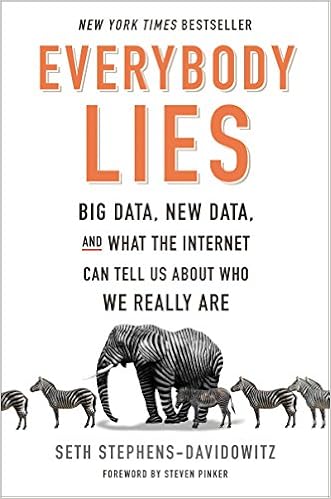 Seth Stephens-Davidowitz - Everybody Lies. Big Data has become the kind of cliché you normally associate with Dilbert cartoons (the insights! the disruption! the leveraged synergies! - just add Big Data!), so it's nice to see someone drag the buzzword out of its reputational bog, clean it up for an audience, and show off its practical uses. While marketing departments and academics have always hungered for data to draw inferences from, the simultaneous rise of large data sets, cheap processing power, advanced statistical techniques, and readily available consumer data has created a seemingly endless new frontier in analyzing previously opaque human behavior. Survey data is notoriously unreliable: for example, the average number of self-reported sexual partners is famously higher for straight men than for straight women even though mathematically they must be equal (since everyone must go home with someone, this is charmingly known as the "high school prom theorem"). But since data can be collected in other ways that are harder to fake, like search history, browsing behavior, click rates, or app usage, an intelligent researcher can cut through the noise to shed new light on these problems. He comes up with all kinds of insights, from the discovery that lesbian porn is surprisingly popular with straight women, to the recommendation that wives should spend more time wondering if their husbands are alcoholic and less if they're gay, to the depressing conclusion that child abuse is going increasingly unreported. Under no circumstances should mindless number-crunching take the place of rational thought, but Big Data used properly is a valuable new tool to learn about ourselves, so this book comes off like a humbler yet more useful Freakonomics.
 Matt Taibbi - I Can't Breathe. This is the non-fiction version of a great 19th century novel, with the tragic death of Eric Garner in 2015 due to a police chokehold as just more spin of the wheel in the vicious cycle of petty crime, aggressive policing strategies, and structural racism that makes up everyday life for too many people in America's underclass. Taibbi has always been a meticulous journalist, but this is a whole new level of detail and insight for him - he has seemingly spoken with everyone who ever knew Garner to explore how life works once you're caught up in the grinding gears of the legal system, and just how many ways there are for the justice system to get rid of unpleasant cases when no one wants to be held accountable. Taibbi has written his heart out, but this is ultimately an extremely sad book, since not only did Garner die pointlessly, the ultimate indifference of America as a whole to the killing of one poor black man implicates just about all levels of American society, even you and me. I don't know what his opinion on David Simon's work is, but this easily stands up beside The Corner or any of Simon's other work as a cry for us to look at what we've done and what we need to change.
But, if you only had the time to read one, I'd pick Thomas Flanagan's amazing novel about the French invasion of Ireland during the French Revolutionary Wars, or Joe Heinrich's explanation of how gene-culture coevolution makes humanity so unique.
Fiction:
PFTCommenter - Goodell vs Obama. If you read or watch or follow any of the increasingly WWE-esque football sports-industrial complex at all, PFTCommenter is a must-read. His character - an invincibly ignorant, supremely confident internet commenter who actually believes the dumbest opinions spewed by ESPN talking heads and takes them to the next level - is essentially unique in the world of sports columnists, and only he could do justice to the greatest story ever told, a true clash of the titans. When Jerry Jones dies of a botched plastic surgery accident, a legal loophole allows Barack Obama to seize control of the Dallas Cowboys, and only Roger Goodell, the greatest league commissioner in all of sports, can prevent him from turning America's Team into a Kenyan soccer club via a mano a mano boxing match. There are so many brilliant details and jokes piled upon jokes in here that it boggles the mind, and the fact that it's all filtered through PFTCommenter's unique character, spelling and all, makes it close to the perfect sports take, like one of the old Something Awful articles by Jeff K expanded to its logical limit. Part of being a sports fan is knowing when to stop taking it so seriously, and this incredible tale of heroism, villainy, and football is absolutely perfect for that.Ken Liu- Invisible Planets. Not having read much, or really any Chinese science fiction before, I picked up this volume as an intro. I've at least heard of Liu Cixin, the author of the well-known Three-Body Problem trilogy; he contributes two of the thirteen short stories and one of the three ending essays, and the rest of the authors I'd never heard of are for the most part quite good as well. Like all good short story collections, the wide variety of styles, themes, and perspectives included gives you a hint of how much richer the wider world of Chinese science fiction is, while still being satisfying on its own. The translations from the Chinese by Ken Liu, noted author in his own right, preserve the distinct voices of the original authors and offer a taste of what makes them special, while flowing smoothly enough for a monolingual English-speaking reader like me. I frequently found myself reminded of particular Western science fiction stories when reading these, but I wouldn't say that they're derivative (or at least when they are, as in the 1984-homage "The City of Silence", they're quite open about it), merely that they touch on similar themes. The ending essays are very high quality as well.Thomas Flanagan - The Year of the French. During the tumult of the French Revolutionary Wars - before the Great Man himself transformed them into the Napoleonic Wars - the haphazard French attempts to aid Irish rebels in their independence are usually relegated to a footnote. After all, we know how the story ends, and the classically British mix of luck, skill, and sheer ruthlessness which ended those efforts condemned the Irish to over a century more of brutal colonial rule. But in Flanagan's hands this doomed effort to spread the flame of the Revolution to 1798 Ireland takes on a epochal significance. The French generals, British commanders, Catholic peasants, Protestant landlords, and more who populate the novel struggle with their own pieces of the conflict while never seeing quite the whole thing; it's an absorbing study of how warfare works on the ground as well as an effective way to shoe how different a cause seems on each side of the argument. You see the contradictions of French atheists liberating Catholic Irish from Protestant English, as well as the difficulty in replicating the formula of the self-liberation of the French in a country without its institutions and with a very different sense of itself, all while knowing that no matter how important the Irish struggle for self-determination felt to them, that even to their French allies they were a sideshow and a means to a broader end. It begins slowly, but by the end you get that rare sense of visiting a real living world that only the best historical fiction delivers.Nikolai Gogol - The Collected Tales. Even if he had published nothing but Dead Souls, Gogol would still have a claim to be one of Ukraine's all-time greatest novelists. Luckily for us, he kept writing, and these excellent short stories show that his transition to becoming a more "Russian" writer did not dampen his humor or invention one bit. This collection shows off both sides of Gogol's output: first, the strange, magical Ukrainian stories full of drunken peasants, quarreling landowners, hilarious religious bigotry, and fantastical adventures that he wrote to exoticize his homeland to his new Russian friends. Second, there's the more conceptual St. Petersburg stories, which have more realist settings but no less surreal plots, with maddening bureaucracies, inexplicable transformations, and copious humiliations for the unfortunate denizens of the Russian capital. The second half has the more famous stories like The Nose and The Overcoat, which show Gogol's gift for presenting absurd situations in a straightforward, even poignant way, but even the earlier stories have their touches of genius, often coming across as minor theatrical masterpieces or as undiscovered fairytales. Almost no one was better at taking a mundane scene, adding an outlandish twist, and then following that wherever it led to emerge on the other side as a savage social critique.Tom Stoppard - Rosencrantz and Guildenstern Are Dead. Works like this are proof that the boundary between fanfiction and independent art is completely arbitrary, and perhaps totally meaningless. Yes, this play is a derivative work of Hamlet, but not only does it not really require you to have read its famous forebear (although you certainly should, for many reasons beyond giving this some context), but Stoppard's reflections on mortality, chance, and the contingency of life stand on their own. There is no reason whatsoever that philosophy can't be funny, and even on the page the dialogue and action is hilarious, as poor old R & G wander through this frequently metafictional work that fills in the gaps of Hamlet, meeting their ultimate fate in a way that's both inevitable given what happens without their knowledge in Hamlet as well as poignant purely on its own. I could go on and on about how skillfully Stoppard uses tropes like the play-within-a-play, or how he nods to other famous existentialist works like Waiting For Godot, but this is about as close to a perfect comic play as it gets these days.Non-Fiction:
Jonathan Chait - Audacity. Barack Obama has been criticized in so many ways for so many different things, it would be refreshing to see a forthright and unapologetic defense of his legacy just for the novelty factor alone. The audience here seems to be mainly disappointed liberals who have bought into some variant of "he started off well, but either got only half-measures done or didn't even try". Chait demolishes these criticisms one by one: over a staggering range of policy issues, Obama was not only pretty good at getting things done, but right up there in the pantheon of liberal heroes like FDR and LBJ. Seen in full context, Obama's accomplishments were tremendous, and unlikely to be fully reversed even by the most determined efforts of the current Trump cadre of reactionary Republicans. While one could have always hoped for more (Guantanamo Bay, etc), given the maddening institutional constraints of the United States political system, Obama made remarkable progress in health care, climate change, education, and seemingly dozens of other areas that looked permanently out of reach during the Clinton and Carter years. This is not a "neutral" work of scholarship but an argument; Chait is advocating for his point of view, but on the merits I think he's correct that Obama is underrated. A successful contrarian take must not only assemble uncontroversial truths to package them into a surprising conclusion, it must also make that conclusion seem obvious in hindsight, and by the end of this book the idea that Obama was in any way a disappointment seems laughable. By the standards of US Presidents (admittedly not always a very high one), Obama has very few peers in American history.Joseph Henrich - The Secret of Our Success. Love him or hate him, Jared Diamond's resource and geography-based theories of differential human social complexity in Guns, Germs & Steel have spawned an entire genre of Big History books refuting, supporting, or extending his arguments, and it seems like every few months there's an important new entry in the Big History field that presents a new angle on those research questions. Henrich's discussion of how gene-culture coevolution differentiates humans from all other species on earth thanks to our ability to pass on better ways of doing things is a fascinating bridge between E. O. Wilson's work on the logic of kin selection vs group selection in social animals in his books On Human Nature and The Social Conquest of Earth, as well as Peter Turchin's work on how cooperation and competition between and within human groups drives social complexity in his books War and Peace and War and Ultrasociety. Our dependence on culturally transmitted knowledge is a tremendous strength that allows our collective intelligence to conquer seemingly any environment on earth, even while individual humans are absolutely terrible at figuring out basic survival skills, or really just about anything, purely from scratch. The ideas in here interact well with Smithian/Hayekian theories of the importance of the division of labor, as well as more common sense ideas about the importance of public education and freedom of speech for spreading and improving general knowledge. That there's solid evolutionary theory here as well puts this in the top tier of Big History books.Nate Silver - The Signal and the Noise. As the most famous "data journalist" out there, Nate Silver is the poster child of the recent trend of using data analytics to enhance traditional journalism (not to be confused with writing whatever you want and then throwing a graph on it). While he made his name in baseball and politics, and he does discuss those subjects in detail, in this book he also sets his sights a little higher: not just how to tell good predictions from bad predictions, but how to actually make predictions, weigh evidence, and even change your mind. The first part of the book discusses examples of prediction in sports, economics, and more offbeat areas like earthquakes and natural disasters, while the second is a guided tour through Bayesian statistics, the current best model we have for making inferences about uncertain events and updating our guesses in light of new information. Agree or disagree with him, the alternative to the bad use of statistics is not no use of statistics, and Silver's approach to modeling is about the best there is out there in terms of humility and rigor. Even should you violently disagree with him, he quite helpfully gives you plenty of conceptual tools to go and improve on his work on your own. Sometimes the chapters feel breezy, but given how low the general level of statistical literacy is out there, in comparison this is a masterclass in clear, concise, and useful thinking. And, in a slightly meta reflection upon finishing the book, given his relative success in acknowledging the uncertainty in the 2016 election forecasts (his model gave Trump 30% chance to win on the eve of the election vs 1% at places like the New York Times) I feel I can trust him more, which essentially proves his point. It's always neat when a book does that.Seth Stephens-Davidowitz - Everybody Lies. Big Data has become the kind of cliché you normally associate with Dilbert cartoons (the insights! the disruption! the leveraged synergies! - just add Big Data!), so it's nice to see someone drag the buzzword out of its reputational bog, clean it up for an audience, and show off its practical uses. While marketing departments and academics have always hungered for data to draw inferences from, the simultaneous rise of large data sets, cheap processing power, advanced statistical techniques, and readily available consumer data has created a seemingly endless new frontier in analyzing previously opaque human behavior. Survey data is notoriously unreliable: for example, the average number of self-reported sexual partners is famously higher for straight men than for straight women even though mathematically they must be equal (since everyone must go home with someone, this is charmingly known as the "high school prom theorem"). But since data can be collected in other ways that are harder to fake, like search history, browsing behavior, click rates, or app usage, an intelligent researcher can cut through the noise to shed new light on these problems. He comes up with all kinds of insights, from the discovery that lesbian porn is surprisingly popular with straight women, to the recommendation that wives should spend more time wondering if their husbands are alcoholic and less if they're gay, to the depressing conclusion that child abuse is going increasingly unreported. Under no circumstances should mindless number-crunching take the place of rational thought, but Big Data used properly is a valuable new tool to learn about ourselves, so this book comes off like a humbler yet more useful Freakonomics.Matt Taibbi - I Can't Breathe. This is the non-fiction version of a great 19th century novel, with the tragic death of Eric Garner in 2015 due to a police chokehold as just more spin of the wheel in the vicious cycle of petty crime, aggressive policing strategies, and structural racism that makes up everyday life for too many people in America's underclass. Taibbi has always been a meticulous journalist, but this is a whole new level of detail and insight for him - he has seemingly spoken with everyone who ever knew Garner to explore how life works once you're caught up in the grinding gears of the legal system, and just how many ways there are for the justice system to get rid of unpleasant cases when no one wants to be held accountable. Taibbi has written his heart out, but this is ultimately an extremely sad book, since not only did Garner die pointlessly, the ultimate indifference of America as a whole to the killing of one poor black man implicates just about all levels of American society, even you and me. I don't know what his opinion on David Simon's work is, but this easily stands up beside The Corner or any of Simon's other work as a cry for us to look at what we've done and what we need to change.
Thursday, December 28, 2017
Best albums I listened to: 2017




Thursday, December 22, 2016
Best albums I listened to: 2016


Wednesday, December 21, 2016
Best books I read: 2016
2016 was a big rebound, in terms of both quantity and quality, from my reading nadir of 2015. I found some real gems this year, and more than doubled my raw total to get back up to 2014's figure of 36 books. But more than any recovery in reading, I found that this was the year when I made the most progress on my writing. A few years ago I made a firm commitment to myself to write a review for any book that I finished. They range all the way from quick paragraphs to multi-thousand word monstrosities, but I've found that I enjoy writing them almost as much as reading the books themselves, and I do feel like I've actually gotten better at creating them. I've accepted by now that I'll never be "happy" with my own writing, cursing myself as I do at all the places I see where I could have been clearer, funnier, or more insightful - but I've learned that other people enjoy them, and that in itself is worth a lot to me. All of these paragraph summaries below go to the full reviews on Goodreads, and of course you should be following me there as well!
What was best this year? In terms of fiction, Elena Ferrante's Neapolitan Novels became personal favorites, and even though I don't often have the time to re-read books these days, I can easily see myself dipping back into them to more fully absorb their story. I'm also going to keep plowing through the one or two Michel Houellebecq that I haven't read yet, as well as Robertson Davies, who also stood out in a crowded year for non-fiction. All of the non-fiction in my top 10 are no-brainer recommendations, but if you had to read only one, I would pick either Geoffrey Miller or Tom Vanderbilt's books. Here's to 2017!
Fiction:

Adolfo Bioy Casares - The Invention of Morel. I read that Borges praised this book, and indeed in the Introduction he says that "To classify it as perfect is neither an imprecision nor a hyperbole." While I'm not quite sure it reaches those Olympian heights of accomplishment, this hazy, hallucinatory science fiction novella posed an enormous number of great questions. It begins as the simple diary of a man hiding from the world on a remote tropical island who encounters some mysterious intruders, but the slow revelation of its premise is eventually tied in with the main character's impossible, unrequited love in a way that also manages to function as a 1930s-era reaction to the invention of motion pictures with sound, which is pretty interesting from the perspective of 2016. Its simple, clear prose comes across well even in Ruth Simms' translation, which makes the otherworldly events of the novel more vivid in that H.G. Wells way (whose own The Island of Doctor Moreau is an obvious influence). And much like a Wells novel, Casares's work touches on broader social themes like the morality of technology, how it offers escape from nature, and its effect on population.

Ted Chiang - Stories of Your Life and Others. A fantastic mix of science fiction short stories that don't skimp on the science or the fiction. While many individual aspects of the stories reminded me of more famous works, that should only be a credit to Chiang, as he never simply repeats any of his predecessors and always provides a new and interesting angle on the general ideas. One of the hardest things to do in fiction is to establish a unique voice, and while I would never call his prose style particularly distinctive, he's able to get his concepts talking for him in a way that few authors manage.

Robertson Davies - A Mixture of Frailties. Every Davies book I've read so far has been really enjoyable, but I found this one truly exceptional. His later novels are more technically skilled - the Deptford trilogy taken as whole contains more detailed characters and more insight into the subjectivity and serendipity of personal experience - but of his individual works that I've read, this one presents Davies' personal philosophy of "live life to the fullest" in the most engaging way. I realize that to a reader in 2016, "the Canadian inferiority complex towards British art and society circa the 1950s" might not at first seem to be the most riveting thematic scaffold for that idea, yet the way that he entwines that commentary with the musical training and personal growth of a young girl from Canada sent to England to learn about art is both a great narrative and fun from a meta perspective, without ever being overly self-aware. In fact, the more you give yourself over to how harmonious Davies' view of life is, the more it rubs off on you, and you wish more authors could blend comedy and drama so smoothly.
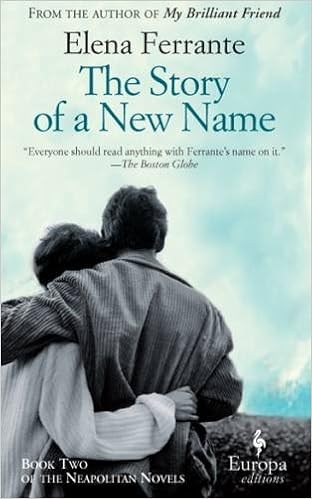
Elena Ferrante - The Story of a New Name. I've read that Ferrante split the single Neapolitan Novels story into four volumes for publishing reasons, but it's perfect that the reader gets dropped right back in, because the intensity of the story hasn't let up a bit. My current summary of what the books are "about", which is a silly way to box in such a fearless and expansive creation, is the power of choices in life. Well, it's also about the futility of completely excising memories, what happens when people try to create new lives for themselves, the problems of love that come with adulthood, the importance of small decisions that you're often unaware you've made, the strengths and limits of education as a way to improve your life, how hard it is to see yourself as a full and complete person, the difference between how you see things and others see things, and, of course, Elena's ever-more complex relationship with Lila, her best friend and chief spiritual rival, which has gotten both richer and more distant as their lives diverge.
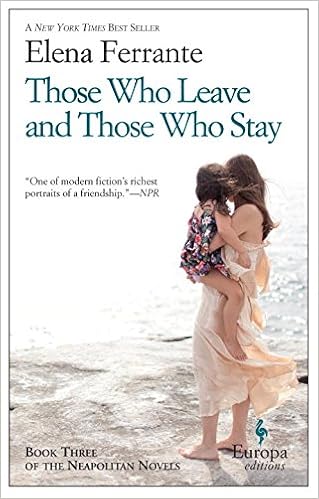
Elena Ferrante - Those Who Leave and Those Who Stay. Neapolitan Novels volume 3 is not any less gripping then the preceding two volumes, even if it starts off a bit slower than volume 2. Elena's steadily intensifying domestic drama easily overcomes a weak self-referential subplot about the critical reception of the novel she wrote in the last book, while Lila's struggles with the fallout of her own decisions become even more interesting when set against the labor militancy of the time. While both characters live in much larger worlds than they did as children, and desperately seek to widen their horizons and pursue their own dreams, they still find themselves constrained by their own choices and their own personal limitations. It's remarkable how much Ferrante makes you sympathize with people making truly terrible decisions out of short-term blindness, but I think most readers will be slapping their foreheads in frustration by the end of this one, as Elena's momentous decision at the book's climax really makes you wonder if Voltaire's line of "to know all is to forgive all" is actually true.

Elena Ferrante - The Story of the Lost Child. The final volume of the Neapolitan Novels has just the balance of clarity and ambiguity that it deserves. All of the plotlines are "closed", but the central mystery of Lila's place in Elena's life is open forever, as it should be. Her children have given her a mixture of pride and frustration. Her past lovers brought both disappointment and fulfillment. Even the city of Naples, which she's been constantly running from but never entirely leaving, remains as alienating as it is inescapable. She ends the final book with Lila having vanished from her life, trying to write the story of her relationship with her best friend, knowing that it will never truly capture the most essential aspects of that friendship but unable to desist. You knew exactly how the story would end from the very beginning of the first volume, but you had to see how Ferrante would get there, and that ability to compel the reader's attention over the subsequent thousands of pages is the mark of a truly great writer. I can nitpick individual parts of the series but overall it's exactly as great as everyone says it is.

Nick Hornby - High Fidelity. The film version of High Fidelity is the greatest romantic comedy about music fans ever made. The book itself, which I'd stupidly not read until just now, was not one bit less good. As with all truly meaningful art, I found different things to relate to now than I did when I saw the movie back in college, but much of it was just as great as I remember: the protagonist has the right balance of likability and unlikability, his music obsession is as admirable as it is embarrassing, and the resolutions of his personal and professional crises are as inspirational as they are aspirational. As a romantic fantasy for anyone who thinks that sharing musical taste (or any kind of taste) with someone means that everything will always work out for the best, High Fidelity can't be beaten, and even the parts where I disagreed with the plot had me thinking about how my own life was "supposed" to go. Even its sappy ending is unhateable.

Michel Houellebecq - Platform. Platform is a great example of Houellebecq as a deeply moral writer. That might sound like an odd description for someone who writes such lovingly detailed scenes of group sex, but it's true - amid his signature brand of overwhelming cynicism for the modern world, Platform contains some of his most moving passages on the search for happiness and fulfillment. If you read Houellebecq's novels out of order, like me, then it's striking how consistent yet unrepetititive he is. In each novel he has the same preoccupations, the same characters, and the same writing style, and though you would think that only a very few hands could be drawn from such a small deck, the strength of those themes, his ability to place his essentially identical author-surrogates in fresh situations, and his great sense of irony and black comedy make his books worth shuffling through. The sex doesn't hurt, either.
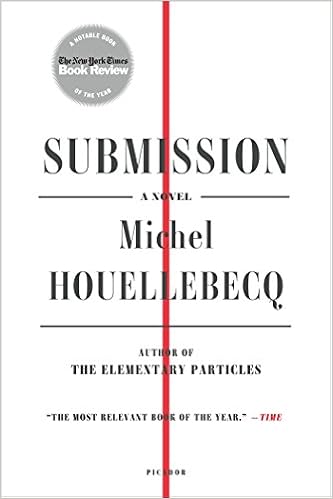
Michel Houellebecq - Submission. Submission was published on the same day as the Charlie Hebdo shootings in 2015. That tragedy only deepens Houellebecq's novel, which could not be more relevant to questions of cultural identity and the individual's relationship to changes in the surrounding society. And even though the book is deeply political - the French left vs the right, nativism vs the existing power structure, secularism vs Catholicism vs Islam, traditional French national identity vs new possibilities, the Enlightenment vs pre-Enlightenment thought - fundamentally Houellebecq's classical preoccupation with the modern self remains: which direction does the contemporary man turn to for truth in a post-everything world? Once every modern source of authority is suspect or discredited, what's left to answer the pull of ancient dogma? Furthermore, by returning to religious certainties, what exactly would be lost?

Enrique Vila-Matas - Bartleby & Co. High-concept literature like this provides so much pure pleasure that it's a real shame that a sequel would be inappropriate. Taking its title and central inspiration from Melville's immortal scrivener who would "prefer not to", this is an "anti-novel" in the form of 86 footnotes about writers who would also prefer not to, who possess the capability to write and create but choose instead to refrain. Channeling Kafka, Pessoa, Borges, Beckett, Salinger, and many more, Vila-Matas provides an oddly hopeful exploration of the various motivations that writers use to avoid practicing their craft, from seclusion to despair, exhaustion, and suicide. Yet as this novel is itself an act of creation, Vila-Matas shows that even the lengthiest list of Nos can still somehow add up to a Yes.
Non-Fiction:

Robertson Davies - One Half of Robertson Davies. There are few things more pleasant or more absorbing to read than a work by someone of enormous erudition, perception, and taste where they just let loose and talk about the subjects most near and dear to their heart for as long as they want to. I've always thought that Davies' prose style - learned, opinionated, funny, curious sarcastic, but above all reader-friendly - would work at least as well spoken as it does on the page, and boy does it ever here. This is a collection of mostly speeches that he gave throughout the later part of his career, mixed with a few short stories, plus a few odds and ends. The primary highlight for me was the four long lectures in Part Five where he talks about the Problem of Evil in literature, drawing heavily on the Jungian philosophy that underlies the Deptford trilogy, but this is a phenomenal companion to his novels and essential for any Davies fan. I came away thinking that the title was even more cleverly chosen than he intended, since it means that it contains only just a part of him, and you end it wanting much more.
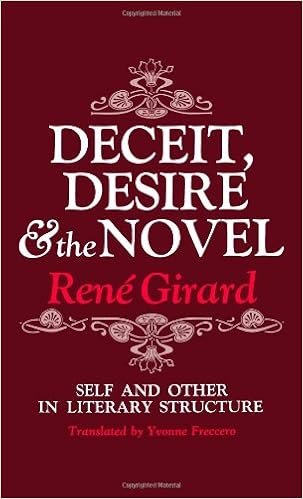
Rene Girard - Deceit, Desire, and the Novel. The basic theory of mimesis, or "imitative desire" laid out in the first 10 pages of this book is one of the most powerful and thought-provoking literary theories I've ever read. In the best tradition of revelatory theories, Girard's thesis that the lion's share of our desires, be they physical objects, sexual partners, glamour-related, or status-based, come from observing and copying the desires of others is intuitively sensible, convincingly argued, and infinitely applicable. Sometimes it takes a particular phrasing to make something click in your mind, and while the idea behind "keeping up with the Jones" is as old as the hills, the way that Girard connects the source of envy, jealousy, and hatred to both the appeal of classic literature and the petty emotions of everyday life is so elegant you'll wonder why you never thought of it in that way before. The rest of the book is a long exegesis of examples from great novels you probably haven't read, but the core insight is so valuable that it's worth powering through the rest of the book.

Jennifer Homans - Apollo's Angels. To my surprise, this appears to be the first general history of ballet ever written. That's a real shame, because as Homans shows, ballet is more than just another slowly dying elite artform like opera. Not only is it intimately linked to the other cornerstones of Western culture like music, theater, and film, it continues to set the standard for demonstrating how the movement of the body can produce beauty. You don't have to be a ballet fanatic to enjoy this book, but some familiarity helps, as she deeply explores the history of the form; its artistic movements; the cultural influence of France, Italy, and especially Russia; the major composers, choreographers, and dancers; and of course the actual ballets themselves, explaining much of the symbolism that a layman like myself would not have noticed otherwise. Homans danced with George Balanchine's School of American Ballet for several years, and so her intimate understanding of ballet's appeal to both the head and the heart is apparent on every page, and even though she writes with sadness of the passing of ballet's glory years, your "to watch" list will still be quite large after finishing.
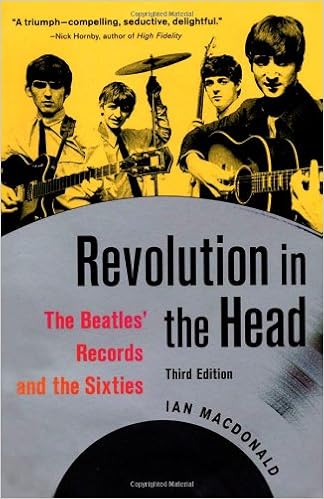
Ian MacDonald - Revolution In the Head. The Sixties have left a cultural hangover that we haven't slept off in 50 years, and The Beatles were one of the strongest drinks of that decade. Even if you're not a superfan, it's worth pondering why so many people keep coming back to the bar for another round, and MacDonald produced an incredibly well-researched look into their music and its place in that decade and beyond that actually discusses the music itself, as well as its social context, without devolving into Baby Boomer navel-gazing or unthinking fandom, though he tacks on some endearingly reactionary rants about how much better music was back in the day. I had never read a book on The Beatles before, but now I don't feel like I need another one. MacDonald is "critical" in the best sense of the word, enthusiastically poring over just about every aspect of the songs, from the historical background to the composition to the lyrics to the music, with a perceptive, nuanced, intelligent ear for what made their songs so surprising and distinctive. He's able to show where they fit into the context of their times, and also why they still matter to so many people, while not failing to point out when they wrote a lazy tune or flubbed a take. Best of all, even if you were understandably a bit tired of the most endlessly discussed rock group in history, he makes you want to relisten to the music all over again.
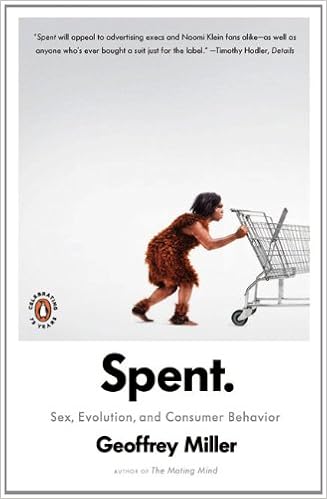
Geoffrey Miller - Spent. This book hooked me from its name alone: not only is the pun on its subtitle of Sex, Evolution, and Consumer Behavior exactly my sense of humor, those subjects are right up my alley. Miller's thesis is that much of modern conspicuous consumption is a waste, and not just in the environmental sense. In his view, much of what we buy as signaling and trait display devices are also a waste in evolutionary terms, because human beings are already extremely good at figuring out who they want to have sex with, and most purchases don't actually add much value to the whole mating determination process. Proving that takes him through evolutionary psychology, the economics of consumption, product marketing and consumer behavior, signaling theory, the relationship between technological progress and human nature, the quantification of personality types, how shared qualities like musical taste relate to sexual attraction, and the politics of conservation. He's really funny and well-read, with a keen eye for how our endless quests to spread our genes manifest themselves in our product purchases, with plenty of references not only to recent scientific research, but also to relevant pop culture like The Sims.

Viginia Postrel - Glamour. Before I read this, I had thought of glamour as being essentially synonymous with glitz; some showy display designed for and appreciated by shallow people. Not "serious"; not for me. Postrel did a phenomenal job of showing me how wrong I was, articulating how universal the concept of glamour is and how it works, and really putting the lie to the idea that you can be somehow "above" fashion, style, or trends. She manages the neat trick of posing questions of taste without imposing questionable taste herself, and discusses what makes things attractive and desirable to people in an approachable and insightful way. Replete with plenty of examples from all aspects of life, the book gives you a fascinating way to analyze your own desires and sense of aesthetics. Perhaps even more importantly, it conclusively demonstrates that anyone who doubts that illusions are not only important but even necessary in their life is merely participating in an ever bigger illusion.

Robert Simonson - A Proper Drink. Craft cocktails have absolutely exploded in my lifetime, if you (quite reasonably, in my mind) define "lifetime" as "my life once I turned drinking age". If it seems like liquor drinks have gotten way more complicated than a simple gin and tonic since the turn of the millennium, it's because they have: the dramatic surge in the quality, variety, complexity, and popularity of craft cocktails is a very recent phenomenon with a surprisingly international backstory. Simonson reaches all over the planet to profile the bars, drinks, ingredients, and bartenders who transformed cocktail drinking from the sullen refuge of depressed midcentury businessmen into the performative artisanal showcase for trendy young people that we know it as today. If you've wondered why there's suddenly so many Prohibition-themed bars popping up near you or why there's so many baffling variations on a French 75, look no further than this book.
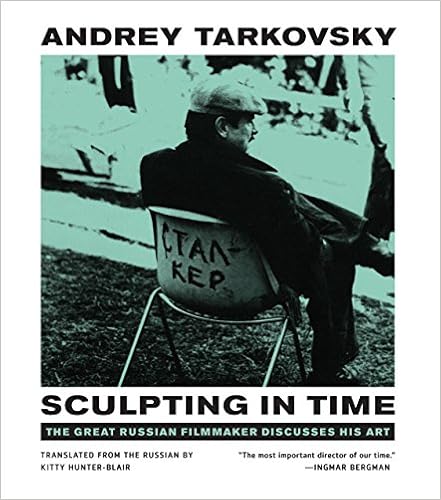
Andrei Tarkovsky - Sculpting In Time. It's always a pleasure when great artists talk about the art that they consider great and why. Tarkovsky would be a cinema legend if all he had ever done was Stalker, but here he shows, even beyond the evidence of his other films, that he's articulate and insightful enough about art in general to be worth reading for his criticism alone. In this essay collection he uses his own movies as specific examples of his general aesthetic philosophy, but his real sights are set a bit higher than his own work: the purposes of art; how spirituality informs his creative goals; how cinema differs from the other arts like painting, theatre, literature, music, etc; the problem of communicating and connecting to an audience without writing "for" them; and most importantly, why time itself is the primary medium of film. Many of his opinions are contentious, but his personality is strong enough that if you were ever curious about why so much ink was spilled over the "auteur theory" of film back in the day, this is one reason why.

Peter Turchin - Ultrasociety. Ultrasociety is an extension of Turchin's thesis, laid out in his earlier War and Peace and War, that warfare is the primary driver of civilization. Why are humans so good at cooperating together in groups? Because warfare between groups is a powerful selector for traits of cooperation, so over time societies that have been good at getting their members to work together within groups have outcompeted less cohesive ones. Or, as Benjamin Franklin said to encourage his fellows struggling to establish a new group identity: "We must, indeed, all hang together, or assuredly we shall all hang separately." This inside the tribe/outside the tribe distinction has fascinating implications for many aspects of modern society, in particular understanding how and why many types of violence have declined over time, so if War and Peace and War often seemed like a response to Jared Diamond's Guns, Germs & Steel, Ultrasociety can be seen as a response to Steven Pinker's The Better Angels of Our Nature.

Tom Vanderbilt - You May Also Like. I've been fascinated with taste for a long time, and Vanderbilt, whose previous work Traffic is a must-read for anyone with a commute, collected in this book almost everything I've ever wanted to say about it. He discusses what taste is, where it comes from, how it works, and how it relates to status - plus plenty of other aspects I hadn't thought of, all over such varied domains as food, wine, beer, music, art, film, architecture, pet breeds, and baby names. As you would expect for such a complicated, circular, and subjective topic, his analysis is somewhat digressive, but in a good way, with plenty of specific and well-chosen examples. He's careful to build upon the works of famous philosophers of taste like Pierre Bourdieu, Immanuel Kant, and David Hume, updating their thoughts about objectivity, social determination, and personal identity for the modern era. He investigates the act of judgment while being reasonably non-judgmental himself. Best of all, his conclusions are lots of fun to discuss: is our sense of taste a carefully curated expression of our innermost selves, or the circumstantial accumulation of stochastically-determined signaling indicators that are essentially meaningless in and of themselves? Both!
Subscribe to:
Posts (Atom)