Showing posts with label nonfiction. Show all posts

Tuesday, September 24, 2019

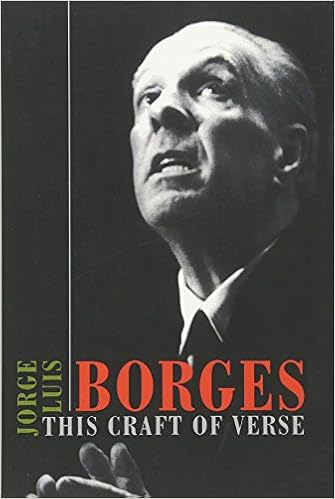
Book Review: Jorge Luis Borges - This Craft of Verse

Every Borges lecture is always a treat (see also the superb lecture collection Professor Borges: A Course on English Literature), so thankfully this recent transcription of a series of rediscovered lectures Borges gave at Harvard in the 60s has been made available to us. Not only was he one of the greatest writers of all time, but such a generous reader and riveting speaker that it's impossible to not want to immediately jump on everything he references. I do think his modesty is often comical, as in his occasional phrasings of "oh, I may have forgotten this minor detail", when the reader knows full well that he delivered these multilingual, polyphonic, omnierudite lectures based solely on memory without any notes at all, but his humble and self-effacing demeanor is so sincere, and his passion for literature so genuine, that it would be crazy to not give him the same charity as he gives his audience. Even the titles of the half-dozen lectures here are intriguing - "The Riddle of Poetry", "The Metaphor", "The Telling of the Tale", "Word: Music and Translation", "Thought and Poetry", and "A Poet's Creed" - but to actually read them (or hear them; the whole thing is on YouTube) is to be transported into the presence of someone who is overflowing with pleasure at the inexhaustible joys that come from the simple act of reading really fine literature. Here are some choice quotes that I enjoyed in the course of reading it, but the thing has to be experienced in its completeness because there's insights on every page:

Sometimes, looking at the many books I have at home, I feel I shall die before I come to the end of them, yet I cannot resist the temptation of buying new books. Whenever I walk into a bookstore and find a book on one of my hobbies - for example, Old English or Old Norse poetry - I say to myself, "What a pity I can't buy that book, for I already have a copy at home."
If we think of the novel and the epic, we are tempted into thinking that the chief difference lies in the difference between verse and prose, in the difference between singing something and stating something. But I think there is a greater difference. The difference lies in the fact that the important thing about the epic is the hero - a man who is a pattern for all men. While, as Mencken pointed out, the essence of most novels lies in the breaking down of a man, in the degeneration of character.
Walter Pater wrote that all art aspires to the condition of music. The obvious reason (I speak as a layman of course) would be that, in music, form and substance cannot be torn asunder. Melody, or any piece of music, is a pattern of sounds and pauses unwinding itself in time, a pattern that I do not suppose can be torn. The melody is merely the pattern, and the emotions it sprang from, and the emotions it awakens. The Austrian critic Hanslick wrote that music is a language that we can use, that we can understand, but that we are unable to translate.
Remember that Alfred North Whitehead wrote that, among the many fallacies, there is the fallacy of the perfect dictionary - the fallacy of thinking that for every perception of the senses, for every statement, for every abstract idea, one can find an exact counterpart, an exact symbol, in the dictionary.
When I speak of night, I am inevitably - and happily for us, I think - reminded of the last sentence of the first book in Finnegans Wake, wherein Joyce speaks of "the rivering waters of, hitherandthithering waters of. Night!" This is an extreme example of an elaborate style. We feel that such a line could have been written only after centuries of literature. We feel that the line is an invention, a poem - a very complex web, as Stevenson would have had it. And yet I suspect there was a moment when the word "night" was quite as impressive, was quite as strange, was quite as awe-striking as this beautiful winding sentence: "rivering waters of, hitherandthithering waters of. Night!"
I think of myself as being essentially a reader. As you are aware, I have ventured into writing; but I think that what I have read is far more important than what I have written. For one reads what one likes - yet one writes not what would like to write, but what one is able to write. 
I had read in Lugones that the metaphor was the essential element of literature, and I accepted that dictum. Lugones wrote that all words were originally metaphors. This is true, but it is also true that in order to understand most words, you have to forget about the fact of their being metaphors. For example, if I say, "Style should be plain", then I don't think that we should remember that "style" (stylus) meant "pen", and that "plain means "flat", because in that case we would never understand it.

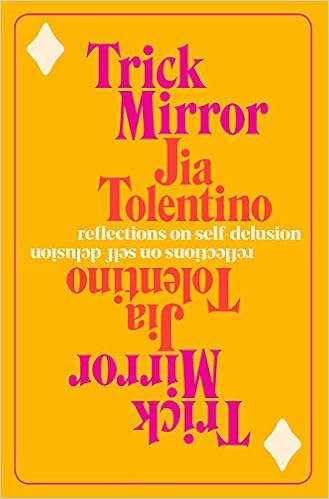
Book Review: Jia Tolentino - Trick Mirror

The rise of Online as its own distinct space for writing, thinking, and living has presented as many challenges for writers as opportunities, in purely literary terms. It's often difficult for a lot of writers to use the weird, performative, enchanting-but-dispiriting nature of the internet as a platform for self-discovery without shading into navel-gazing. Is posting an inherently interesting act, or, equally plausibly, is it just a big waste of time that has an even lower probability of being interesting to hear about than someone's dreams? Tolentino neatly threads the dangerous needle of using the internet directly as a subject, managing to be in it but not of it, and never coming across as too self-absorbed even when she's trying to place her own life in the context of a world which often doesn't make any sense at all. She has a lot more to talk about than just the internet's effect on discourse and self-image, but whether she's discussing reality TV, Millennial-vintage scams, drugs and religion, or the many questions posed to contemporary feminism, she exactly captures that sense of coming up with a bunch of neat epiphanies and relating them to other people, with the resultant burst of pleasure when your thoughts finally strike a chord with someone else.

For me these essays seemed to group themselves into 2 loose clusters. One focuses on her personal life story. "The I in Internet" is a thoughtful analysis of why exactly the internet, which theoretically could be a nonstop delight to use, instead so frequently feels awful to use, particularly for writers like her who both hate and yet depend on it (as she says, "first, how the internet is built to distend our sense of identity; second, how it encourages us to overvalue our opinions; third, how it maximizes our sense of opposition; fourth, how it cheapens our understanding of solidarity; and, finally, how it destroys our sense of scale."). "Reality TV Me" is both a rumination on her experience on one of those amazing trashy early-2000s reality TV shows, in hindsight one of our most enduring cultural innovations, and also a discussion of how your own view of yourself can be warped by exposure to the lure of celebrity. "Ecstacy" is about growing up in the hothouse environment of Houston evangelical Protestantism, surrounded by sex, drugs, and chopped and screwed hip hop, and what that's done to her own personal sense of enlightenment and creativity. "The Story of a Generation in Seven Scams" uses the peculiarly Millennial scam of FyreFest, which she appeared in a documentary on, as a particularly emblematic example of how young people's lives have been warped by an entire culture of scams: predatory banks in the financial crisis, onerous student debt for useless degrees, duplicitous social media and its emphasis on obsessive self-presentation, "girlboss" corporate feminism, openly fraudulent companies like Juicero or Theranos, "disruption" and the gig economy's creation of a new precariat, and of course Donald Trump, who if history is in any way just will eventually be as eponymous for scamming as Elbridge Gerry is for unfair redistricting.

The other essay constellation focuses on various facets of feminism in the modern era. "Always Be Optimizing" is about how capitalism intersects with the beauty arms race, as in the phenomenon of expensive, regimented fitness programs like barre, and the always-tricky politics of sex-positivity; I was frequently reminded of Virginia Postrel's excellent book Glamour. "Pure Heroines" explores the struggles of identifying with female characters in literature, with a particular focus on children's literature (I think one of the first things I ever read from her was her wonderful review of Gordon Korman's oeuvre in Jezebel; she has a real gift for putting into words exactly what makes certain books stick in your mind through the years). "The Cult of the Difficult Woman" tackles the profound ambivalence many women (and men too) feel about criticizing terrible women in a culture where misogyny is still potent; I was reminded of Molly Ivins' spectacular takedown of Camille Paglia in her piece "I Am the Cosmos". "I Thee Dread" involves her own complicated feelings about not being married to her long-term boyfriend, but her melange of sentiments will be very familiar to anyone who's been in a perfectly happy long-term relationship and had to field "so, when's the big day questions?", which of course are typically directed to women. The final essay, "We Come from Old Virginia", puts Sabrina Erdely's fraudulent Rolling Stone campus rape story at UVa, her alma mater, in the context of a culture of sexual assault which is all too real, and how it's possible for scumbags like Brett Kavanaugh to sail through life without any consequences at all while at the same time countless women face nothing but bad options for dealing with their own experiences in a society which treats each false accusation as the equal of countless accusations which never got made.

In the Introduction she mentions a throwaway line she once wrote that what women often seem to want from feminist websites is a "trick mirror that carries the illusion of flawlessness as well as the self-flagellating option of constantly finding fault." No one's perfect, but not an inch of the extra space she uses in these essays goes to waste.

Sunday, August 25, 2019

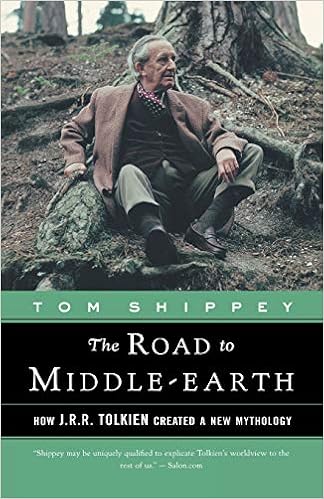
Book Review: Tom Shippey - The Road to Middle-Earth

J. R. R. Tolkien was better at transporting readers into a living, breathing, fully-realized fictional reality than almost any other author who has ever lived. While for most readers the pleasure of the stories themselves is sufficient alone, more hardcore aficionados like myself want to see the deep roots of such a remarkable creation. How did he do it? Shippey's work delves deeply into Tolkien's inspirations, artistic obsessions, and creative process. It will greatly satisfy the sort of person who finds the LOTR appendices as interesting as the plot they've just finished. There's an infamous dropoff in readership from The Hobbit, to The Lord of the Rings, to The Silmarillion, and then to the likes of Unfinished Tales, but for the small group of fans who not only sympathize with but valorize Tolkien's decades of effort with his legendarium simply to create plausible settings for his artificial languages, this book provides an incredibly interesting account of how Tolkien's attitudes toward the power of words shaped his characters, stories, settings, and indeed his entire thematic repertoire. I thought I was a dedicated fan (although to my shame I have not read any of the 12 posthumous volumes of The History of Middle-Earth), but Shippey has read every one of Tolkien's works so many times that he enhanced my appreciation for the under-the-hood craftsmanship in the Tolkienverse more than I thought possible.

The short answer to "why is Tolkien so great?" is that he had a clear vision (or rather a series of visions), he made sure his plots and his themes lined up, and he put a ton of work into what for most authors would seem like irrelevant background details. Tolkien really loved a lot of old epic poetry that his fellow linguists were lukewarm about, but that turned out to provide excellent templates for modern stories even across the vast cultural gap between modern England and its millennium-old antecedents. Shippey doesn't use any film analogies, but as he was discussing how Tolkien studied Beowulf carefully in order to produce similar effects with his own works, I was reminded how a lot of the better genre films put modern material atop older structures in order to take advantage of people's love of both the familiar and the new. So, for example, successful science fiction films mix the genre with noir as in Blade Runner, with Westerns as in Star Trek, with samurai/swashbuckers as in Star Wars, etc. Tolkien used the format of the children's adventure story in the The Hobbit as a comforting framework for his "modern mythology", upgrading to a more adult literary style in The Lord of the Rings, and then dispensing entirely with contemporary narrative formats in his drafts for The Silmarillion, which would have been nearly impenetrable to lightweights and casuals even if he'd been able to finish it.

While Shippey does use Tolkien's own writings as primary sources, and his acknowledged inspirations as secondary material, the book is mainly concerned with tracing Tolkien's own attitudes towards his work; not merely wondering why Tolkien dedicated so much of his life to this fantasy world, but how he made it so convincing to others. The storytelling urge is nearly universal in young children, but most people's fantasies are not very interesting to other people, and nearly all of us eventually turn our mental narrative generation machinery over to more prosaic concerns due to the pressures of adulthood. One of the things that made Tolkien unique was his determination to maintain his creative processes for his whole life; there have of course been countless novelists in history, but Tolkien's novels stand apart from most other writers by his decision to ground them in linguistics, to most people perhaps the dullest soil possible to sprout a fantasy world from. Even his colleagues, who may have been fellow linguists but not true philologists ("philology" = "love of learning"), certainly did not appreciate languages aesthetically to the same degree, and were often skeptical or dismissive of the power of words, leaving Tolkien as one of the very few linguists who appreciated the ancient epic poetry as poetry. Shippey quotes a letter from Tolkien to his son Christopher:
Nobody believes me when I say that my long book is an attempt to create a world in which a form of language agreeable to my personal aesthetic might seem real. But it is true. An enquirer (among many) asked what (The Lord of the Rings) was all about, and whether it was an 'allegory.' And I said it was an effort to create a situation in which a common greeting would be elen síla lúmenn' omentielmo, and that the phrase long antedated the book. I never heard any more.
Even today, Tolkien's works seem to stand above the obligatory constellations of fanfiction that always surround seemingly similar media franchises like Harry Potter or Game of Thrones. This is because fanfiction authors, even the most talented ones, naturally tend to focus on the appeal of the characters, and in Tolkien's works the interactions of the characters are only one of the things going on. The chapter "The Bourgeois Burglar" in particular is a fascinating exploration of just how hard Tolkien worked to ensure that the language and vocabulary of the hobbits, men, dwarves, and so on was congruent with their nature, which complemented the alternately comic and dramatic tone of their interactions with each other, and how the broader thematic concerns then are revealed by the plot in turn (see Adam Roberts' thoughtful review in the July 2017 Strange Horizons contrasting Tolkien's approach with that of with a modern author like Patrick Rothfuss). In the chapter "Interlacements and the Ring" Shippey extends this deep alignment to Tolkien's religious explorations, handled far more subtly here than in C. S. Lewis' otherwise comparable Narnia series. Is evil active or passive, Manichean or Boethian, a force unto itself or a mere turning away from the good? Is the Ring a pagan symbol, and the cosmology of Middle-Earth therefore heretical? Tolkien spent a huge amount of time ensuring that his creation worked consistently within itself and with the pre-Christian heroic motifs underneath it without openly contradicting Christian doctrine, to the extent possible. He was not immune to the problems of internal contradiction, which partially explains his immense difficulties finishing his later works, but perhaps any truly great work inevitably expands beyond the point where all its pieces can fully harmonize together. Just look at any of the more modern "epic" properties with teams of writers and all the money in the world, and Tolkien's accomplishments seem all the greater.

On the subject of consistency, one of the more unexpectedly moving chapters is "Visions and Revisions", when Shippey discusses the meaning that the story of Beren and Lúthien had to Tolkien. It's only one part of the Silmarillion, but Tolkien rewrote it so many times that even though it's hardly known, its story of a grand quest undertaken for a powerful yet ultimately doomed love was clearly more dear to him than any other part of his whole creation (Tolkien and his wife's gravestones read 'Beren' and 'Lúthien', respectively). This obsessive dedication made me think of other works that get compared to his, for example Wagner's operas, which Shippey doesn't discuss until the first appendix (as always with Tolkien, read the appendices!), and how idiosyncratic Tolkien's vision often was. Tolkien evidently did not think highly of Wagner as a dramatist, which somewhat surprised me, but it makes more sense when you realize that, as with all great artists, he hated basically everything, particularly artistic works seemingly very similar to his own:
Tolkien was irritated all his life by modern attempts to rewrite or interpret old material, almost all of which he thought led to failures of tone and spirit. Wagner is the most obvious example. People were always connecting The Lord of the Rings with Der Ring des Nibelungen, and Tolkien did not like it. 'Both rings were round', he snarled, 'and there the resemblance ceases' (Letters, p. 306). This is not entirely true. The motifs of the riddle-contest, the cleansing fire, the broken weapon preserved for an heir, all occur in both works, as of course does the theme of 'the lord of the Ring as the slave of the Ring', des Ringes Herr als des Ringes Knecht. But what upset Tolkien was the fact that Wagner was working, at second-hand, from material which he knew at first-hand, primarily the heroic poems of the Elder Edda and the later Middle High German Nibelungenlied. Once again he saw difference where other people saw similarity. Wagner was one of several authors with whom Tolkien had a relationship of intimate dislike: Shakespeare, Spenser, George MacDonald, Hans Christian Andersen. All, he thought, had got something very important not quite right. It is especially necessary, then, for followers of Tolkien to pick out the true from the heretical, and to avoid snatching at surface similarities.
Now, I personally love Wagner, and rank the Ring Cycle as an incredible artistic achievement, but Tolkien of course has a point about how he and all those other authors are not really playing the same game (though read George Orwell's "Lear, Tolstoy, and the Fool" essay on Shakespeare to see how differently even great writers can rank artistic merit). This is another reason why I think comparisons of Tolkien to people like George Lucas, or (especially) George R. R. Martin can only go so far; Martin might have excellent points about flaws in Tolkien's models of political economy (the infamous "What was Aragorn's tax policy?") and so forth, but it's like comparing a Balzac novel to the Epic of Gilgamesh solely because they both have prostitutes in them. Shippey extends this point further in another book called Author of the Century, which I haven't read, but even if you don't agree with Shippey that Tolkien will eventually represent the entirety of 20th century literature the way that Shakespeare epitomizes the 16th, it's enough to note that Tolkien invented an entire literary genre just to give his mock-Welsh and faux-Finnish artificial languages a playground, and no one else has done anything even close since. Tanner Greer's essay "On the Tolkienic Hero" notes that Tolkien seems untouched by irony, and even though it seems strange that it took a fussy and incredibly opinionated academic, one who wrote entire poems about how misguided oak trees (his critics) couldn't understand the pure love of learning natural to birch trees (philologists like himself), to create one of the greatest adventure stories of all time, perhaps the only conclusion is that the genius and genesis of literature might remain as forever mysterious to us as the Undying Lands, or as the power of words themselves.

Friday, June 7, 2019

Book Review: Dessa - My Own Devices

Dessa's songs are often the most lyrically interesting on each Doomtree album, and the direct connections between her life and her music means that it's not really surprising that this book is so good. The way she picks big topics (what does it mean to be in love with someone? if you could get rid of that love, would you?), neatly expresses them in poetic apothegms, and then wraps them in compelling narratives is right in line with her songwriting style, so if you're a big fan of her on the stage, she won't disappoint on the page. An unhappy love affair is one of the oldest and most compelling stories in the world, and though she's very analytical and contemplative about this huge part of her life, she's never less than heartfelt, even as her mission is to extract a still-beating piece of that heart and cauterize it so that she can never be hurt by it again. She's always perceptive, cheerfully nerding out over her latest insight or discovery, and able to make even the most mundane account of meeting someone interesting by way of a sharp eye for telling detail. No Doomtree fan should miss this.

Not every piece in here is related to her primary subject either chronologically or thematically, but it's the main story that's of course the most interesting: what was it like to fall in love with the person who also recruited you into the band that's defined your identity for decades, unhappily orbit that person romantically for many years, and then be so desperate to free yourself from the moth-flame lethality of obsession that you resort to experimental brainwave feedback therapy to reprogram your neurons to make it stop? Fascinatingly, even though essentially the entire book is about P.O.S., whenever Dessa is discussing their on again/off again relationship, she always quasi-superstitiously refers to him as "X" (as in, "I moved to New York to put some distance between me and my X"), which gives the whole tale of limerance an interesting not-quite-confessional air, of honesty with a very specific limit. At one point, she discusses her attitude towards vulnerability: "In the lyrics and the essays I write, I blow most of the doors open. It's not that I have a particular interest in confessional art - it's just that true stories are boring if you skip all the embarrassing bits." She mentions that P.O.S. gave his approval to her writing about him (and throughout she is unfailingly gracious and at worst merely melancholic towards him), so her distancing from him via a pseudonym for a pseudonym! is all the more notable.

Of course, "confessional" writing is a fiercely contested genre, with part of the contest being whether it exists as a distinct classification at all. Writing in a diary isn't like writing a LiveJournal, which isn't like writing a weekly column, which isn't like writing a book, even though all are different formats in which someone can commit their intimate thoughts to a place where someone else can read them. And in all of those formats, it's perfectly possible to capture thoughts which aren't "confessional" at all, in the sense of unburdening yourself or of revealing a secret. Maybe this blurring of typology goes back to Montaigne, or maybe it's more a product of modern technologies (Jia Tolentino once wrote a good piece titled "The Personal Essay Boom Is Over" in the New Yorker about the rise and fall of the "first-personal industrial complex"), but in Dessa's hands, a piece of her life is never just a straightforward memoir or travelogue, it's an opportunity to make a philosophical connection, puzzle over a problem, or just explore a cool metaphor. In "The Mirror Test", for example, one of the side chapters, she smoothly relates lipstick application, self-recognition in animals, our resemblance to our parents, lucid dreaming, drug-induced memory loss, harmonized singing, whether makeup hides, reveals, or highlights beauty, the dissolving sense of self during psychedelic episodes, selfies, what it's like to hear her mother sing, and which characteristics of ourselves might carry over into heaven. A worse writer would make those connections feel mannered and artificial; in Dessa's hands they're just different facets of the same intuitive gem.

Maybe another aspect of the confessional writing question is whether the end result is supposed to be generalizable or broadly relevant in some way. People LOVE advice columns, or dating stories, or mindless romantic reality TV shows, not just for the gossip, or for the cultural evolutionary benefits of seeing others' mistakes in the hopes of not making them yourself, but because expressions of universal feelings are an ideal way to experience connections to someone else in a way we're all hungry for. It might be true, as Dessa said, that confessional art necessarily involves personal embarrassment; another way of looking at it might be that it's actually honesty and vulnerability that truly interest us, and as George Orwell once said, "A man who gives a good account of himself is probably lying, since any life when viewed from the inside is simply a series of defeats." Seen in that light, Dessa's use of Helen Fisher's writing on romantic attraction and a complicated MRI-based biofeedback sonic system to medically remove her attraction to P.O.S. presents a real question to the reader: is this whole sequence either a profound failure to cope with the pains of love, or a triumph over personal limitations? At what point do (unfortunately all-too-relatable) feelings of lovesadness shade into a liability, and is there actually anything wrong with doing whatever it takes to get them to go away? Assuming that "the opposite of love isn't hate, it's indifference" is actually true, shouldn't we be celebrating this science-fictional triumph over malfunctioning neurochemistry, or should we actually be expecting Dessa's future artistic output to be less resonant now that one of the main wellsprings of her material is gone? In "The Fool That Bets Against Me", she hilariously explores the idea of getting her talent for turning sadness into songs insured; should that hypothetical claim now be denied?

By the end of the book, the treatment has by Dessa's account worked splendidly, and she seemingly has the best of all worlds: moving on with her romantic life, continuing to produce art, and retaining fond feelings for P.O.S. Most people probably don't have her sanguine affection for her X with their own exes, anger or indifference being far more common, but even a singularly drastic experiment like hers is still useful to the less-obsessed or less-radical reader out there. I've been listening to Doomtree since 2012, so not nearly as long as more hardcore fans, yet I'm still intrigued by how she's made her personal journey part of her artistic evolution, and I'll keep reading and listening.

Saturday, October 27, 2018

Book Review: Robertson Davies - The Merry Heart

It would be weird to prefer Davies as an essayist or speaker, given his skills as a novelist and love for the form, but I'm nearly there, and I almost can't help it - if you enjoy his humor and insight, it's often "faster" to consume it in the form of his speeches than in his novels, as pleasant as those are, because without those cumbersome accoutrements of plot and characters, you can enjoy his sagacity in concentrated form. Much like in the earlier essay/lecture collection One Half of Robertson Davies, you get a wide-ranging selection of his thoughts, here on the writing process, the power of literature, and, most intriguingly, the author as a moralist. While there are no truly tremendous lectures like the four-part Jung opus in the other collection, and there is one downright awful speech he gave at the very end of his life, for the most part this is just about as pleasurable as you could want, and all the more impressive given that many of these were conceived in the twilight of his career, when he was in his eighties. Davies died before the invention of podcasts; one wonders what he would have made of the form given his techno-skepticism, but many of these speeches come off like lengthy but welcome monologues from a favored guest, wisely given the spotlight and the mic by a thoughtful and indulgent host.

First things first: "Fiction and the Future", the penultimate entry within, is by far the worst thing I've ever read from him, a long tirade against science and modernism he delivered in 1994 that comes off less like his typical good-humored uncle persona and far more like a Fox News Grandpa. Now, normally I'm a connoisseur of cranky reactionary rants; I imagine that one of the chief pleasures of getting old is finally having the power to force everyone to listen to every resentful diatribe I've been saving for my dotage, and so I appreciate heartfelt examples of the form. Complaining is a cherished human pastime for us all, and there's no reason that it can't be as fun to read as it is to do. But while science fiction is just about the last genre I'd ever imagine the firmly classicist Davies to ever express useful opinions on anyway, he goes far beyond the considered apprehension of the possibilities of technology I'd expected and unleashes all kinds of frankly stupid resentments on things like genetic engineering and nanotechnology that are beneath him. 

Now, Davies was born in 1913, and I would no more expect an avowed "technomoron", as he dubs himself later on, to suddenly reveal an Isaac Asimov futurist side than I would my grandmother (who also attended Queen's University just a few years before he did). I mean, there's a whole other essay in here, "Literature and Technology", complaining about all writing technology newer than the typewriter; he just wasn't made for these times. Still, it's unpleasant and unnecessary to read these tirades about political correctness and how modern society is making science into a new religion that could have come from any bargain-bin Wall Street Journal op-ed hack. He does have some decent riffs on the kinds of plots that technology permits a writer (for example, he prefigures the movie Gattaca during his genetics meanderings), but the tone is almost shockingly ill-tempered, and I hope for everyone else's sake that my eventual senescent harangues won't be this bad.

What's especially jarring about "Fiction and the Future" is that "Literature and Technology", which deals with extremely similar concepts from a different angle, was written just 5 years earlier in 1989, and it's great. Instead of asking what technological advancements will do to the contents of novels, it's about how technology relates to the writing process itself. Predictably, Davies justifies his dismissal of newfangled inventions like word processors with the standard old dog/new tricks argument, as well as various clever metaphors about the distinction between quantity and quality. "Mere bulk is not the measure of a literary artist's capability. He does the best he can, and like a cow we judge him by his butterfat content and not by the number of pails he fills." 

Yet, as you would expect for a writer so fascinated throughout his career by the power of the irrational currents sweeping throughout our subconscious minds, his real argument is that technology is fundamentally orthogonal to creativity, and the real questions we should be asking are about where the forces of truly great fiction spring from to begin with, and not how they're translated to the page. Part of it is unaccountable genius, part of it is keen observation, part of it is hard work: "To ask an author who hopes to be a serious writer if his work is autobiographical is like asking a spider where he buys his thread. The spider gets his thread right out of his guts, and that is where the author gets his writing, and in that profound sense everything he writes is autobiographical. He could not write if he had not seen it and felt it deeply." The true effects of technological progress on creativity might forever remain ambiguous; if the internet is any guide, technology enables good writers to get better but also makes bad writers worse. But Davies' final points about the inability of writing aids to duplicate inspiration or style, while perhaps overstated (I've never heard anyone complain that it's too easy to search electronic notes), clearly do have some merit.

"Literature and Moral Purpose", from 1990, is a real treat. One of the reasons Davies loves Dickens so much as a reader is that Dickens was really good at creating memorable characters who experienced morally charged events in a relatable way; as a writer, Davies has the highest respect for his ability to organically communicate inner pathos out to the audience. The real secret to creating such immersive worlds in his view is not so much a good prose style, though that doesn't hurt, as he discusses in more detail in a future speech, but primarily the ability to ask tough questions, and then being willing to follow them wherever they lead. I can't do better than to quote him at length:

For me [a moralist] meant not someone who imposes a moral system upon his art, but someone who sees as much of life as he can, and who draws what conclusions he may. What courses of action lead to what results? Are there absolute standards of good and evil? To what degree is what appears to society rooted in the truth of a particular man or woman? To what degree may the acceptance of a popular or socially approved code of conduct define or perhaps distort a character? Where do the springs of behavior lie; to what degree may they be controlled; how far is a human creature accountable to his group, or his country, or his professed belief (or unbelief) for what he does? How far is it permissible to talk of what a human creature 'makes' of his life, and to what degree does an element of which he may be unaware in himself 'make' his life for him? How far may we accept the dictum that life is a dream, and that we are the creatures in that dream, which is being dreamed of which we have no knowledge? These, it seems to me, are the concerns of the true moralist. He is an observer and a recorder; he may not permit himself to be a judge, except by indirection.

Good questions! That last part is perceptive, and is a great part of what separates great authors from lesser ones. For example, Ayn Rand was a huge fan of Victor Hugo (my copy of Hugo's Ninety-Three has a lengthy introduction by her), and her novels are clearly meant to deal with moral subjects of the kind that Hugo did, in much the same Grand Epic Novel way. But while Hugo tries to draw complete portraits of human beings struggling with weighty choices, connecting even bitterly opposed characters to sentiments and desires common to all humanity, in Rand's hands there is no illusion whatsoever of being in a real world with real people, because she's already got the answers, and the characters are just means to that end. As other perceptive works of literary analysis like René Girard's Deceit, Desire, and the Novel also discuss, the essentially imitative process of our moral struggles means that are no definitive answers to life's moral questions even in theory; to be alive is to question, because if someone had figured out how to live the perfect life in a way that can be duplicated, you'd know it by now. As Davies says, in the meantime all we can do, and all writers can do, is think deeply about deep questions, and faithfully transcribe our partial answers as best we can.

He expands further on the craft of writing in the second of a pair of speeches he also gave in 1990, straightforwardly titled "Reading" and "Writing". "Writing", as expected, is all about what sort of attitude makes a true writer, as opposed to a dilettante. I agree with him that writers are born needing to write in some sense. Even though Davies himself didn't start on his novels until he was 38, he'd been a journalist and playwright before that, and the vast asymmetry of difficulty in literature production versus consumption means that although plenty will try writing, very few will persevere to be writers. I'm always cheered when I read that authors I like didn't start until late; even if it would have been better to start earlier, in order to give the world more of yourself, better late than never, right? But in a way, it might be better for some writers to assemble some stability in life before they attempt their art. The life of an author is famously unglamourous because writing is in a sense using the author to produce itself. Davies makes fun of a magazine targeting credulous aspiring writers who are "unsophisticated enough to believe that writers live marvellous social lives, eat and drink very high on the hog, and have access to unlimited apocalyptic sex." By no means are all writers miserable wretches, but often misery and wretchedness are unavoidable companions. All this, though, is secondary to his discussion of "shamantsvo", a term Vladimir Nabokov plucked from Russian that loosely means "enchanter-quality" (as in "shaman"). This is style, language, skill at communicating to the reader. He doesn't cite the famous quote, which like many others is often arbitrarily attributed to Oscar Wilde, that writing is "spending all morning inserting a comma and spending all afternoon taking it out again", but his discussion of the eldritch art of using the right words to make the right feelings come across in the right way is, as you would expect, full of apt phrases.

"Reading", the other half of that pair, is notable because in comparison to the number of pieces on how to write well, you see far fewer discussions on how to read well. We're all familiar with statistics showing a general decline in number of books read, thanks to TV/the internet/video games/etc, but what would it mean to see a similar decline in comprehension? That's inherently a subjective measure, so Davies appeals to elite understandings of what it means to "read well"; he gives an example of a fellow student from long ago who had done all the required readings for her English degree but remained unedified by it. For Davies, to be "well-read" in the best sense is to cultivate your sympathies and ability to feel. As he's elsewhere alluded, this mental and moral ability is not something that is enhanced by technology (I can only imagine what he'd think of the distracting power of the internet or the smartphone), or anything that reduces our ability to pay the kind of close attention that he associates with a real aesthetic experience. Superficial reading is like listening to a symphony as background music, or treating poetry as abstract word patterns, or experiencing any type of art as something other than the main thing that you are doing. If you are reading, then read! Often real appreciation comes from rereading, which sadly is something I myself have done less of these days. He quotes a now-forgotten author John Middleton Murray: "a truly great novel is a tale to the simple, a parable to the wise, and a direct revelation of reality to a man who has made it part of his being." I've gotten a great deal out of rereading, and much like I've listened to my favorite albums to the point where the notes become my thoughts, perhaps I need to slow down and revisit a few of my favorite novels. Even if you're not out to be a member of the "clerisy", just about everyone could benefit from tips on being a better reader, and who doesn't want to be among "those who read for pleasure, but not for idleness; those who read for pastime but not to kill time; those who love books but who do not live by books"?

Another of the more interesting speeches is 1992's "World of Wonders", which deals with a stage adaptation of his novel of the same name, the final volume in the Deptford trilogy. Davies REALLY dislikes having to explain his novels to people (some variant on "if you want to know what it's about, just read the damn thing" appears in several other speeches), but here, when he talks about what it means as a fellow playwright himself to see someone try to translate his novel to a very different medium, he spends a bit of time of time on the differences between how the two forms attempt to compare the same ideas, and a surprising amount of time on the ideas in the novel itself. A play can dispense with much of a novel's abstraction, and condense many pages of action into just a few scenes, but the tradeoff is that in a play, you can't really just have a character explicate a subtle theme that's taken many chapters to develop with a line of dialogue saying "boy, several people's experiences of the same life event can be very subjective, and small actions can have large and unpredictable effects, and all of us contain unexpected multitudes, and life pitilessly destroys our illusions with extremely painful lessons", without it sounding just as awful as that. He spends some time insisting that his own idiosyncratic experiences with and understanding of religion are at the heart of his work, but I think "You gain the mastery of your art at the cost of your innocence" is an aphorism that stands above whatever your relationship to Jungian psychology is. Either way, it's always a treat to talk about subjects he knows so well.

Some other good essays cover Christmas, a topic near and dear to his heart. 1991's "Christmas Books" discusses how essential it is to really believe in the magic of the holiday to write a good Christmas story. Like in the other speeches where he insists upon the primacy of the non-rational, be it traditional religion or modern psychologies, to him there must be something otherworldly about a Christmas tale in order for it to be effective, or otherwise it's just a story that happens to be set around December 25th. I'm reminded of the perpetual nerd debate over whether Die Hard is "really" a Christmas movie; perhaps he's right, and without some openly supernatural event or happening beyond the mundane, you haven't really captured the spirit of Christmas. As you'd expect, Dickens' A Christmas Carol is exhibit A, as it also is in 1993's "An Unlikely Masterpiece". This one is great for how well he conveys Dicken's abilities as a showman, both as a crafter of spellbinding stories, and as a performer when he would read his own works. When I was at the Dickens Museum in London a few years ago, there were many exhibits that discussed his tours, and Davies really conveys well how brilliantly Dickens bridged the divide between the page and the stage. His love of show, his tugging on heartstrings, his embrace of the supernatural to reveal new truths of the world, his larger than life persona - it's no mystery at all why such an extraordinary work has had such a lasting presence in our literature, and in our drama, and in our repertoire of art that conveys essential truths about the most beloved time of the year.

There's more of his speeches and essays to discuss, but as he might say, why read about them when you could just read them? For the most part, you will find exactly what the title promises: an author somehow still near the top of his game, having a grand old time trying his best, with all of his considerable skill, to get you to have one as well.
Wednesday, August 15, 2018

Book Review: Viktor Frankl - Man's Search for Meaning

This is one of those "everyone has read this" classics that contains a lot of hard-won wisdom, and whose insights are worth reiterating even if you've read similar books about therapy or happiness. It's two books in one, and the relationship between the two is interesting even above and beyond their contents. The first half is an extremely moving portrait of the horrors of his time in several WW2 concentration camps, and like a non-fiction equivalent to Varlam Shalamov's fictional Kolyma Tales, Frankl's near-death experiences are made even more powerful by his calm, detached narration. His dry descriptions of the camp, the guards, and the lives of the prisoners are set against the grim absurdities of his near-helplessness at the chance events which determined whether someone lived or died, and those physical struggles are contrasted with his emotional striving to find something to live for, the spiritual sustenance that is almost more important than physical sustenance for a human being to survive the worst that his fellow humans can subject him to. The second half is a brief description of Frankl's chosen psychological discipline of logotherapy, a type of therapy which seems to descend from Stoicism and have left a legacy in modern cognitive-behavioral therapy. It was not nearly as affecting as the first half, but as Frankl himself considers it the more important part, the two haves together are more valuable than either alone.

Outside of questionably authentic thriller novels like Papillon, prison literature tends to be on the grim side. It's just really hard to avoid emphasizing how brutal prison is, and that goes more so for anything about gulags or concentration camps, where death is typically the only way out. The short fiction of the Kolyma Tales remains my gold standard for depictions of bureaucratized horror, but the added realism of Frankl's experiences is not any less harrowing. This section is full of ethical dilemmas, inhuman atrocities, nightmarish gambles (should you volunteer for an extra shift of duty, which could bring you some extra favor but also carries the risk of a quick death?), and cruelty that is not any less cruel for being done out of impersonal duty rather than personalized malice. The only way to remain sane is to concentrate on the good, to find something to live for beyond yourself, yet with the knowledge that fate has its own ideas (Frankl mentions the fable "Death in Tehran", which I'd previously read as "Appointment in Samarra", wherein a man's efforts to avoid his scheduled death only hasten it). The peculiar mixture of constant background risk of death and unbearable tedium reminds him of a Bismarck quote: "Life is like being at the dentist. You always think that the worst is still to come, and yet it is over already." To find your purpose won't save you from death, but without something to live for you're dead even before your body grows cold.

Though it's those narrative parts that will be most likely to stick with readers, in the Preface to my 1992 edition Frankl mentions that the first half of the book is really just an explication of the second half about logotherapy, which is very important to him: his precious manuscript which he lost on his first day in camp was about logotherapy, so it's interesting to see how his drive to see it through to publication helped him survive four different concentration camps before he even published it. I won't pretend to fully understand it - there are too many terms like "noögenic neuroses" and "the existential vacuum" for me to be really comfortable - but it's striking how the purpose of publishing the manuscript helped Frankl popularize a discipline that's intended to help people find purpose. There is much of his real life experience in that quotation from Nietzsche: "He who has a WHY to live for can bear almost any HOW." As he says:

Logotherapy, keeping in mind the essential transitoriness of human existence, is not pessimistic but rather activistic. To express this point figuratively we might say: The pessimist resembles a man who observes with fear and sadness that his wall calendar, from which he daily tears a sheet, grows thinner with each passing day. On the other hand, the person who attacks the problems of life actively is like a man who removes each successive leaf from his calendar and files it neatly and carefully away with its predecessors, after first having jotted down a few diary notes on the back. He can reflect with pride and joy on all the richness set down in these notes, on all the life he has already lived to the fullest.

There's a great Kafka aphorism that I wish Frankl had referenced, because it bears directly on that insistence that logotherapy be attuned to action:

You can hold back from the suffering of the world, you have free permission to do so, and it is in accordance with your nature. But perhaps the holding back is the one suffering you could have avoided.

We know that not nearly all psychological issues can be solved by calm discussion with a therapist, no matter how well trained, and that sometimes suffering isn't ennobling but merely enervating. Frankl is a powerful example of someone who used his suffering to find meaning and achieve good things in the world, and he acknowledges that there were many others who tried no less hard who never made it out of Auschwitz. But while suffering is not a necessary or sufficient condition for finding a purpose, Frankl is absolutely correct in asserting that finding meaning is possible even in the face of seemingly unendurable suffering, which should cheer up people who are in circumstances less dire than Auschwitz (i.e. just about all of us). Perhaps meaning is where you find it, and the clear corollary - that almost any road could lead there - means that logotherapy is no shortcut to psychic satisfaction, but if "the journey can be the destination", and "the real meaning is the friends we made along the way", and so forth through those clichés, then merely by encouraging people to actively find meaning in their lives Frankl has done the world a valuable service, and proved his own point in the process. Not bad!

Sunday, April 1, 2018

Book Review: Navid Kermani - Between Quran and Kafka: West-Eastern Affinities

I love the "literary synthesis" essay subgenre, where an author who's widely read and deeply thoughtful traces the connections between literature and the broader world at their leisure, unlocking hidden insights from silent texts with the help of their brethren. Kermani is ethnically Persian but culturally German, and so most of these essays link elements of German culture, particularly the great authors of the past, to their Islamic counterparts, in often surprising but always logical ways. The Koran is the fundamental text of not merely Islam but also Islamic culture; this gives Kermani plenty to talk about in regards to its influence, although he regrets its near-hegemonic dominance. German literature has no comparable single text, but certain authors come up again and again, most prominently Kafka. Kermani talks very personally about what Islam and Germany mean to him, but like all worldly writers, his interests are far too broad to be confined: not only does the title neatly sum up the major preoccupations of the book, it balances his Iranian heritage and German birth, and also faith and doubt, belonging and alienation, and parochialism and universalism.

- "Don't Follow the Poets!". The power of the Koran owes something essential to its original language, as seen by the plentiful conversion-by-poetry stories. However, the special relationship between religion and poetry in Islamic tradition could be considered a weakness as well as a strength, especially when you consider that modern spoken Arabic has diverged from Koranic Arabic in different ways in different countries. Classical Arabic's beauty hangs over modern Arabic in a positive way, providing endless inspiration thanks to its ambiguities, but also a negative way, with over-literal interpretations risking stagnation: Osama bin Laden spoke Arabic in a plain, austere way that mirrored his fundamentalist religious views.

- "Revolt against God". Dante's Divine Comedy can be seen as a response to Islamic literature, above all the Persian Fariduddin Attar's The Book of Suffering. Many Islamic writers had surprisingly diverse theodicies and attitudes to the "submission" at the heart of Islam, as individuals have similar reactions to the tribulations of life no matter their religion, much as we can see in the different ways the Book of Job is viewed. Though much of the modern Christian and Jewish literary traditions sees themselves as apart from the Islamic tradition in terms of individual independence vs submission, the universal urge of defiance (Kermani's most-lauded cultural signifier) crosses boundaries.

- "World without God". King Lear is Shakespeare's finest work, because of how it parallels the great Biblical drama of Job in its exploration of sorrow, resolution, loss, and loyalty without repeating it; in fact its secularization might even put it above its religious competitor. As George Orwell pointed out, even famed Shakespeare-hater Leo Tolstoy appreciated how Shakespeare put human agency above divine destiny, and even when our explanation for our calamities shifts from the caprices of God to the vagaries of nature/fate (cf. Julius Caesar's "The fault is not in our stars... but in ourselves"), we are still masters of our own fate, even when it hurts.

- "Heroic Weakness". The minor 1759 play "Philotas" by Gotthold Lessing, where a captured prince decides that his death rather than being ransomed will give his country a decisive advantage in a war, offers a useful framework to discuss modern terrorism, not only 9/11 but also crimes in Germany by both supposedly "Germanized" Arabs and "native" Germans. Often people decide that the conflict between your cultural heritage and your ethnic/religious heritage often can't be reconciled; Thilo Sarrazin's infamous book Germany's Self-Destruction's emphatic declaration that Muslims can't ever be anything but Muslim is contrasted with Hannah Arendt's melancholy agreement that Jews are often forced to place their Jewish identity over every other aspect of their selves. To Kermani, all ideologies beneath universalist humanism are beneath any civilized person - patriotism, religion, and ethnonationalism are all deadly traps.

- "God Breathing". The act of breathing - inborn and automatic, yet capable of being voluntarily overridden for brief periods - provides a good metaphor for the eternal question of free will vs human choice. Goethe, the archetypal German humanist, wrote a lot about everything, but in his poem Talisman, among other works, his use of the breath metaphor is a perfect way to think about the spirit of God.

- "Filth of My Soul". Heinrich von Kleist, a German playwright who committed mutual suicide with his platonic girlfriend (!), wrote the play Amphitryon, which contains a scene wherein at a crucial moment the heroine Alcmene, struggling to express her feelings of love, utters a single word: "Ach!" A simple, single word, but in context of the play, as well as compared to the varied depictions of love in von Kleist's other works, it offers an excuse to discourse on the nature of love and its expressions, which range from the brutal devouring of Achilles by Penthesilea to more refined sighing, as in the writings of the great Sufi mystic Ibn Arabi.

- "The Truth of Theatre". Shiite passion plays, known as taziyeh, honor the death of Hussein at the Battle of Karbala. The conventions of the taziyeh are contrasted against the theories of Berthold Brecht, in particular the alienation effect. Brecht rejected much of the philosophical underpinnings of Western drama, especially the emotional catharsis theories of Aristotle which form the implicit backbone of most conventional Western plays, but even though Brecht's works strike observers as very different due to his emphasis on artificiality, taziyeh is often a level beyond Brecht in both in its rejection of the Western model and its use of mythic/historical energies to produce emotional impacts. This is especially due to the role of the audience, which responds to this Shiite origin story in a way that has no contemporary in secular Western theater. It is extremely curious why he does not compare taziyeh to Christian passion plays, however.

- "Liberate Bayreuth!". Yet another Wagnerian conversion story, though Kermani can't get over the lameness of the period staging, feeling that it's unworthy of the grandeur and power of the music. The transcendent effects of some of the greatest music ever written struggles in its settings partially because of its being straitjacketing by the conventions of the past; anti-naturalism produced in an era of naturalism. There's also a funny dig at the operatic pretensions of Roger Waters and Pink Floyd, although he's wrong... The Wall rules!

- "Swimming in the Afternoon". Much like how second-generation Americans often feel not-quite-fully grounded in American culture, Germany can inspire the same ambivalence in its recent arrivals. Kermani feels that way, and so did Kafka: no matter how Kafka wrote, he was tormented by identity - Hapsburg, German, Czech, Jewish? Defining a national literary culture is always tricky, especially when it's one that wants to have an international aspect as well, and even more especially if it's German, which has been separated, united, divided, and reunified in so many ways throughout history, and whose many writers have often been defined as much by their opposition to German politics as much as by their love for German culture. It would be only too fitting to declare Kafka the ultimate German writer, who only escaped the Holocaust by dying too young.

- "The Duty of Literature". The early 20th century Iranian author Sadeq Hedayat was one of those cranky, scandalous, outré writers whose iconoclasm has become much more attractive with the passage of time. His life has many parallels with Kafka, and he was fascinated by his German counterpart, but their artistic sensibilities did not always overlap - Hedayat's stories were much more grounded in everyday life than the more abstract settings of Kafka. Hedayat's interest in Kafka was primarily in Kafka's grim portrayal of the world, an interest made more poignant to the reader by his own suicide, but much like Kafka's reputation has survived his early death, so has Hedayat's.

- "Towards Europe". Poets, Stefan Zweig chief among them, had been singing the praises of Europe as a single entity long before politicians had the vision, even as its nations were still vigorously persecuting their greatest artists over distinctions that now mean nothing. But while "Europe" now means something to the residents of its current member states, you only have to look at the refugee crisis to see how it means something far different to its neighbors to the south. In one sense, Europe's defenses against unchecked immigration are perfectly rational, but in another they are an abandonment of the dreams that helped create it. Refugees are trading the certain death of their homes for the potential death of the crossing of the seas; while the urge to wall oneself off is understandable, one need only look at Europe's history to see where that urge leads. You don't have to be religious to favor accommodating the refugees, you just have to look at the lives and works of the great Europeans of the past.

- "In Defence of the Glass Bead Game". Hermann Hesse's final novel The Glass Bead Game was much derided upon its release, but its vision of a sterile, uncreative world where people play meaningless games all day is, shall we say, not without interest in the modern world. This essay is kind of a downer; Kermani makes many comparisons between our own time and the fictional land of Castalia in the novel, but shies away from the obvious conclusion that we're at the end of our creative tether. I don't agree, but I can sympathize with that conclusion.

- "The Violence of Compassion". On the occasion of being awarded the Hannah Arendt Prize, how the rights of man (based on the idea of universal rights) are balanced against the rights of the citizen (based on a nationalist conception of identification with a particular state), with reference to the American and French Revolutions, as well as Arendt's relationship to Zionism. Are revolutions always providers or guarantors of liberties, or to truly benefit their participants do they require preconditions, like relative equality, that modern revolutions like the Arab Spring lack?

- "Tilting at Windmills". At an event honoring the writer Martin Mosebach, a comparison of his novelistic style with Cervantes', and a question of what really matters in novels:

The structure [of his latest novel, The Moon and the Girl] is frighteningly perfect – and yet that is not what thrills this eulogist, for one, about the laureate. Naturally we younger readers want the explosion, not the perfection; what interests us about the plot is most of all the digression. But, on the other hand, something emerges further in The Moon and the Girl that was not yet present in the early novels, with their fairly endearing characters, and that only in West End, in A Long Night at the latest, takes on the unsettling quality I find indispensable in literature: what emerges is malice. It is no accident that The Moon and the Girl contains the first cold-blooded murder in a Mosebach novel. Literature has to be malicious, it has to hurt; for the sake of humanity itself, it has to be merciless in its view of human beings.

- "One God, One Wife, One Cheese". Kermani's recollections of Hushang Golshiri, an Iranian poet who was a bit of a character.

- "Sing the Quran Singingly". The Koran is meant to be read aloud, and though oral recitation of the Bible/Torah is also important in their respective traditions, the act of speaking what is technically the word of God is more important in Islam. Germans have worried about Muslim efforts to spread Islam in a manner akin to Christian proselytizing, but as the research of scholars like Angelika Neuwirth has confirmed, audience participation is key to the Koran's effect.

- "On the Sixty-Fifth Anniversary of the Promulgation of the German Constitution". Big thanks to modern Germany for being great.

- "On Receiving the Peace Prize of the German Publishers' Association". His memories of Father Jacques Mourad, a Catholic priest in Syria who was kidnapped by ISIS amid their efforts to re-establish a caliphate. Moderate Muslims struggle with these horrors, seeing that some of the greatest victims of fundamentalists are moderates, yet also reaching out for the humanity of those of other religions caught up in this disaster. Seeing this internal struggle exposed is shameful, but also a reminder of shared humanity.

I have never read any of his fiction, but he is unquestionably a superb essayist.

Wednesday, July 1, 2009

Book Review: Matt Taibbi - The Great Derangement


Are we a society, or a sorry collection of deluded, implacably antagonistic interest groups? Is America still a nation of progress, or are we doomed to repeat the Soviet Union's slow decaying rot due to our inability to directly engage the unpleasant reality of our completely dysfunctional culture? Taibbi is easily my favorite journalist working now because he matches the most awesome, effortless prose since Hunter S Thompson (whose position at Rolling Stone Taibbi now fills) with the kind of incredulous anger that can only come from having to cover some of the most degrading and worthless media stories our culture has to offer (the Michael Jackson trial, Lynndie England). The basic premise of the book is that American discourse has become so infected with meaningless sports team-ish tribalism that it's almost impossible for our political system to function effectively. There's tons of hilarious yet depressing reporting on how irredeemably corrupt Washington has become, cheered on by a public that's nearly incapable of making informed decisions on any issues whatsoever due to an utterly worthless media that can only report the most banal and useless stories. I would say that the best part of the book is where he pretends to be born again at Pastor John Hagee's San Antonio megachurch (the same anti-Catholic nutcase who was briefly in the news last year when McCain tried to seek his endorsement), but the writing is superb throughout.

Wednesday, April 1, 2009

Book Review: Mark Ames - Going Postal


By an unfortunate coincidence, I ordered this book right before the 11/5/2009 Fort Hood shooting tragedy, and after finishing it I was angry at how steadfastly unwilling the media (and much of society) are to ask the tough questions about why school and workplace shootings, which were almost completely unknown before the 1980s, have become such a grim and seemingly inevitable part of modern society. Mark Ames places the blame squarely on the new corporate culture of the Reagan years, where employees became expendable assets to be used up and thrown away. He chronicles in vivid detail the lives of these average people who "just snapped", and shows, using a lengthy and fascinating parallel to antebellum slave revolts, how time and time again these shootings were anything but random, how workers deliberately targeted their abusive and tyrannical supervisors while sparing coworkers they liked and yet their actions were always dismissed after the fact as "just random craziness" by a media systematically incapable of recognizing the recurring pattern. The same is true of school shootings like Columbine, where bullied and harassed students, routinely ignored by their school officials, felt that the only way they could bring their lives back under control was to go postal. It's hard to read this book and then read news stories about the Fort Hood tragedy, which is just the latest manifestation of the new ugliness in our society that Reagan symbolized and embodied. A good but extremely frustrating book.

Sunday, March 1, 2009

Book Review: Thomas Geoghegan - Which Side Are You On?


Not that I've read a lot of books about labor law, but this is the most well-written book about the experience of practicing labor law I've ever read, a sort of ground-level counterpart to the labor-market sections of Krugman's book. I once read an Amazon review for another one of Geoghegan's books that claimed that all of his books were really about citizenship in one form or another, and I agree with that. This one focuses on the damage that conservative policies did to the traditional American understanding of citizenship during the 1980s, specifically that of the Chicagoland union members that were being fired in droves as structural shifts in the economy (both natural and planned) eliminated their jobs and their places in society under the guise of the "invisible hand" while the corporations who cheerfully outsourced their jobs made huge profits. Geoghegan is witty and self-deprecating as he recognizes the futility of reversing or even slowing the massive hemorrhaging of jobs, and he pulls no punches in recounting the resulting ugly fratricide as these desperate unions relentlessly and inscrutably destroyed themselves as they lost everything they had. Somehow I ended up reading a lot of anti-Reagan books this year, and this was the second-most vitriolic out of the lot.

Thursday, January 1, 2009

Book Review: Paul Krugman - The Conscience of a Liberal


I've been a regular reader of his always-interesting New York Times columns for years, but ever since I studied his work on trade and urban geography in grad school (coincidentally, the work that would gain him the 2008 Economics Nobel Prize), I've been a huge admirer of his serious economics work as well. The Conscience of a Liberal is a response of sorts to Barry Goldwaters's highly influential 1960 book The Conscience of a Conservative, making the case that if the United States is to remain a country where everyone can pursue their own happiness in maximum liberty and peace, the Reagan-era policies that benefit the rich few at the expense of the poor many must be reversed, and a new New Deal - chiefly the establishment of universal health care - is the best way to encourage opportunity and ensure that everyone can fully participate in the ever-changing American economy. It's also an enlightening history of the modern liberal and conservative movements that does a great job of showing the direct lineage from historical states' rights segregationists to modern health care reform opponents, and how calm debate and careful thinking can and should win out over narrow self-interest and greed. A good way to tell a good book is by how much it gives you to think about after you've finished, and The Conscience of a Liberal had me thinking about it for months afterwards.